Advancements in peptide research continue to highlight small molecular compounds that play roles in cellular communication and biological signaling. One peptide that has received significant attention in laboratory investigations is GHK-Cu, a naturally occurring copper-binding peptide studied for its involvement in cellular signaling, protein interactions, and tissue-related research models. This article explores its structure, mechanism, and research relevance.
What Is GHK-Cu?
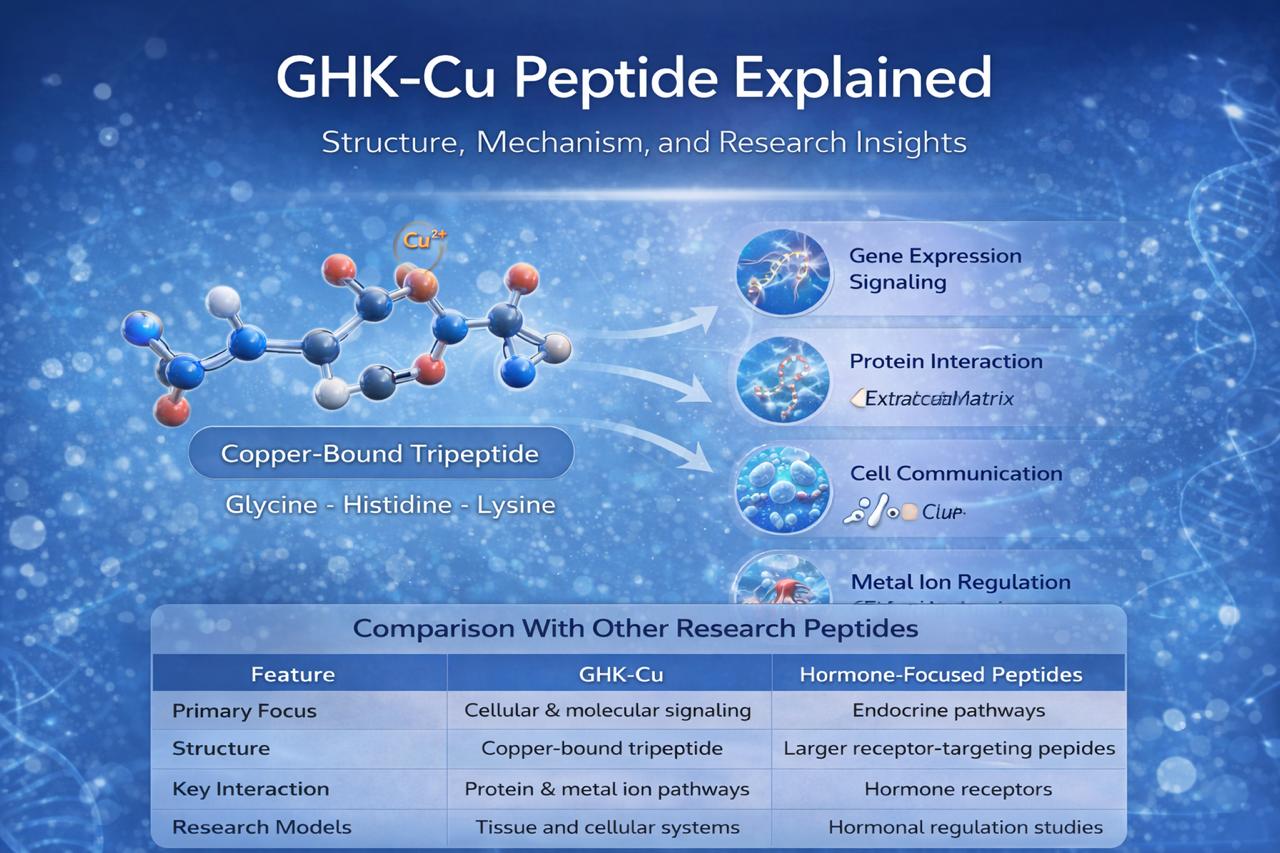
GHK-Cu is a copper-complexed tripeptide composed of three amino acids—glycine, histidine, and lysine—bound to a copper ion. It is found naturally in human plasma and has been detected in various biological tissues, leading to its study in research settings focused on molecular signaling and cellular response.
Chemical Type: Copper-binding tripeptide
Amino Acid Sequence: Gly–His–Lys
Primary Research Focus: Cellular signaling, protein interactions, and tissue models
Molecular Structure of GHK-Cu
The structure of GHK-Cu is defined by its small peptide chain and its strong affinity for copper ions. This combination contributes to:
- Stable copper binding in biological environments
- Interaction with proteins involved in cellular processes
- Participation in signaling pathways investigated in laboratory studies
The copper component is particularly important, as metal ions often serve as cofactors in biological reactions.
Mechanism of Action (Research Context)
GHK-Cu is studied for its involvement in cellular communication and molecular signaling networks rather than direct hormone receptor activation.
Research-Observed Pathways
- Gene Expression Signaling – Studies explore how GHK-Cu may influence patterns of gene-related signaling activity in experimental models.
- Protein Interaction Pathways – Research suggests involvement in pathways related to structural and extracellular proteins.
- Cellular Communication – It is examined for its role in signaling between cells and within cellular environments.
- Metal Ion Regulation – Copper-binding peptides are of interest in studies involving metal ion transport and biological balance.
These properties position GHK-Cu as a peptide of interest in molecular and cellular research.
Research Areas Involving GHK-Cu
GHK-Cu is not approved as a pharmaceutical compound but is widely investigated in controlled research environments.
1. Cellular Signaling Studies
Researchers examine how small peptides influence signaling pathways within and between cells.
2. Protein and Matrix Research
GHK-Cu is included in studies exploring interactions with extracellular and structural proteins.
3. Tissue Model Investigations
Its presence in biological tissues makes it relevant for experimental models of cellular environments.
4. Metal-Dependent Biological Processes
Copper’s role in biological systems makes GHK-Cu important in studies involving metal-peptide interactions.
Comparison With Other Research Peptides
Feature | GHK-Cu | Hormone-Focused Peptides |
Primary Focus | Cellular & molecular signaling | Endocrine pathways |
Structure | Copper-bound tripeptide | Larger receptor-targeting peptides |
Key Interaction | Protein & metal ion pathways | Hormone receptors |
Research Models | Tissue and cellular systems | Hormonal regulation studies |
This comparison highlights GHK-Cu’s unique role outside traditional hormone-focused peptide research.
Stability and Laboratory Handling
As with most peptides used in research:
- Store at controlled low temperatures
- Protect from light when complexed with metal ions
- Avoid repeated freeze–thaw cycles
- Use sterile laboratory-grade solvents for reconstitution
Proper handling ensures consistency in experimental outcomes.
Current Research Status
GHK-Cu remains a research-use-only compound. Ongoing investigations focus on:
- Molecular signaling interactions
- Protein and extracellular matrix studies
- Metal-peptide biological relationships
- Cellular communication mechanisms
Its natural occurrence in biological systems keeps it a relevant subject in peptide science research.
Final Thoughts
GHK-Cu represents a significant area of interest in peptide research due to its small size, copper-binding ability, and involvement in cellular signaling networks. Rather than targeting endocrine receptors, it is studied for its broader role in molecular communication and protein interactions. As peptide science evolves, GHK-Cu continues to contribute to the understanding of how small bioactive peptides influence complex biological systems.
Disclaimer:
This compound is intended strictly for laboratory research purposes. It is not approved for human or veterinary use and is not intended to diagnose, treat, cure, or prevent any disease.