Peptide research continues to investigate short bioactive sequences involved in cellular signaling, regulatory pathways, and molecular stability. One compound frequently explored in laboratory settings is Epitalon (also known as Epithalon), a synthetic tetrapeptide studied for its relationship to cellular regulatory mechanisms and molecular aging research. This article reviews Epitalon’s structure, mechanism, and scientific research context.
What Is Epitalon?
Epitalon is a synthetic tetrapeptide composed of four amino acids that mirrors a naturally occurring peptide fragment associated with regulatory signaling pathways in biological systems. It is primarily examined in cellular and molecular research, particularly in studies involving regulatory processes and cellular lifecycle models.
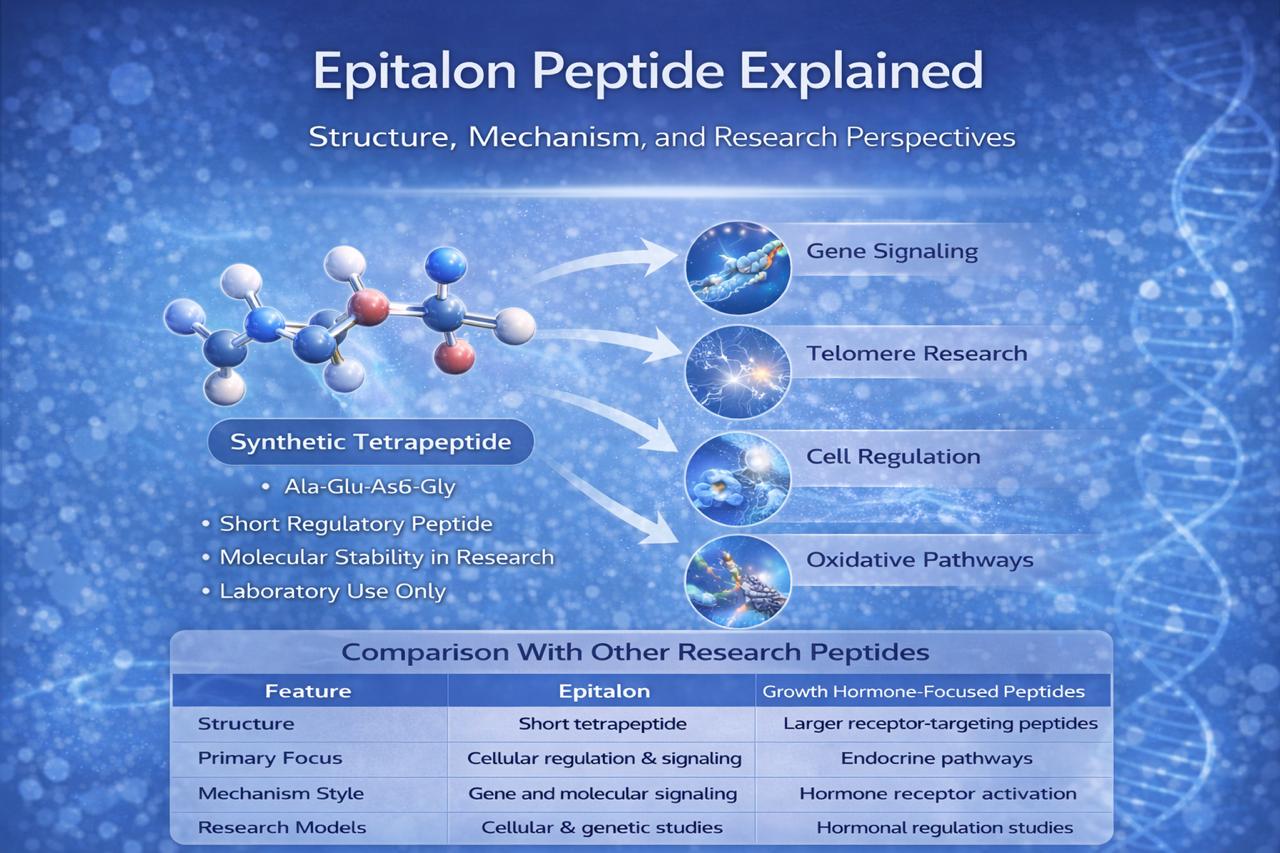
Chemical Type: Synthetic tetrapeptide
Amino Acid Sequence: Ala–Glu–Asp–Gly
Primary Research Focus: Cellular regulatory pathways and molecular stability studies
Molecular Structure of Epitalon
Epitalon’s short sequence contributes to its relevance in laboratory research:
- Small molecular size suitable for experimental cellular models
- Structural similarity to naturally occurring regulatory peptides
- Stability appropriate for in vitro and controlled research applications
Short peptides such as Epitalon are often studied to understand how small signaling molecules influence broader cellular networks.
Mechanism of Action (Research Context)
Epitalon is not classified as a hormone or growth factor but is investigated for its potential involvement in cellular regulation and genetic signaling pathways.
Mechanisms Observed in Research
- Gene Expression Signaling
Studies examine how Epitalon may interact with pathways associated with gene regulation in laboratory models. - Telomeric Research Pathways
Epitalon is often included in research exploring telomere-associated processes and chromosomal stability mechanisms. - Cellular Regulatory Signaling
Researchers investigate its role in intracellular signaling networks that influence cellular behavior and molecular balance. - Oxidative Stress Pathways
Some laboratory models study its association with antioxidant-related cellular responses.
These mechanisms place Epitalon within molecular and cellular research, rather than endocrine-focused peptide categories.
Research Areas Involving Epitalon
Epitalon is a research-use-only compound examined in controlled laboratory environments.
1. Cellular Lifecycle Research
Scientists study how regulatory peptides influence cellular processes over time.
2. Genetic Stability Models
Epitalon is included in research examining chromosomal and telomere-related signaling.
3. Molecular Signaling Studies
Its involvement in intracellular communication makes it relevant for pathway analysis.
4. Oxidative Balance Research
Peptides associated with antioxidant pathways are often included in oxidative stress models.
Comparison With Other Research Peptides
Feature | Epitalon | Growth Hormone–Focused Peptides |
Structure | Short tetrapeptide | Larger receptor-targeting peptides |
Primary Focus | Cellular regulation & signaling | Endocrine pathways |
Mechanism Style | Gene and molecular signaling | Hormone receptor activation |
Research Models | Cellular & genetic studies | Hormonal regulation studies |
This comparison highlights Epitalon’s role in cellular regulatory research rather than hormonal pathway studies.
Stability and Laboratory Handling
For research use:
- Store at low, controlled temperatures
- Avoid repeated freeze–thaw cycles
- Use sterile laboratory solvents for reconstitution
- Protect samples from contamination
Standard peptide handling procedures help maintain experimental consistency.
Current Research Status
Epitalon remains a non-approved research peptide. Ongoing studies focus on:
- Regulatory peptide signaling
- Telomere-associated research
- Cellular aging models
- Molecular pathway interactions
Its short sequence and signaling relevance keep it a subject of interest in peptide science.
Final Thoughts
Epitalon represents a unique area of peptide research centered on cellular regulation, genetic signaling, and molecular pathway studies. Rather than acting through endocrine receptors, it is investigated for its involvement in intracellular communication and regulatory networks. As scientific exploration of short peptides advances, Epitalon continues to provide insights into complex biological signaling systems.
Disclaimer:
This compound is intended strictly for laboratory research purposes. It is not approved for human or veterinary use and is not intended to diagnose, treat, cure, or prevent any disease.