Peptide research continues to expand our understanding of endocrine signaling, receptor activation, and metabolic regulation. Among the compounds studied in laboratory environments is Tesamorelin, a synthetic analog of growth hormone–releasing hormone (GHRH) designed for receptor-specific interaction. This article explores Tesamorelin’s molecular structure, mechanism of action, and role in scientific research.
What Is Tesamorelin?
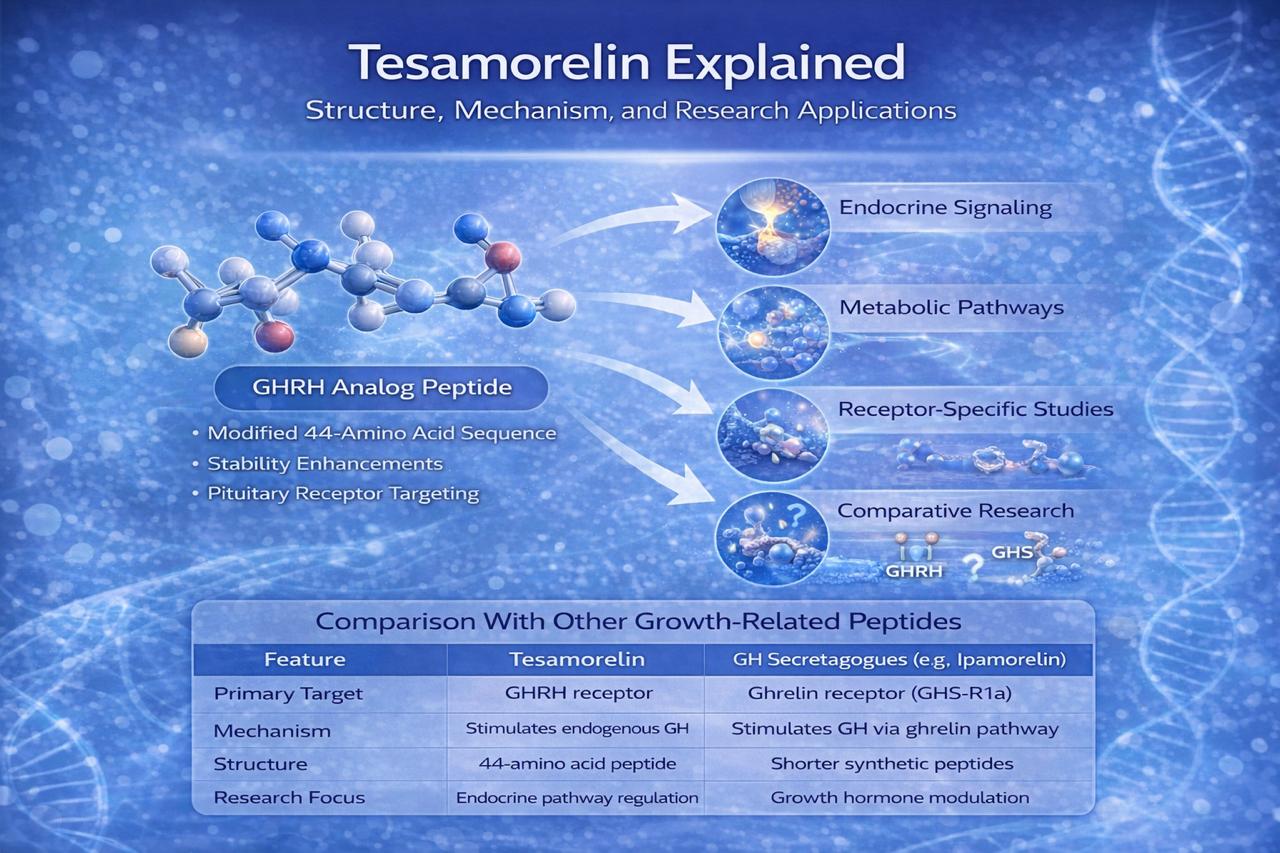
Tesamorelin is a synthetic peptide analog of growth hormone–releasing hormone (GHRH). It was engineered to mimic the activity of endogenous GHRH while offering improved stability in biological systems.
Peptide Class: GHRH analog
Structure Type: Modified 44–amino acid peptide
Primary Research Focus: Growth hormone regulatory signaling
Unlike direct growth hormone compounds, Tesamorelin functions by stimulating endogenous signaling pathways through receptor interaction.
Molecular Structure and Design
Tesamorelin is structurally similar to naturally occurring GHRH but includes modifications that enhance stability and receptor interaction.
Key structural features include:
- A 44–amino acid sequence
- Modifications that reduce rapid enzymatic degradation
- Targeted affinity for GHRH receptors
These characteristics make Tesamorelin particularly useful in controlled research environments studying endocrine signaling pathways.
Mechanism of Action (Research Context)
Tesamorelin operates through interaction with the growth hormone–releasing hormone receptor (GHRH-R) located in the anterior pituitary gland in biological models.
Research-Based Mechanism
- Receptor Binding
Tesamorelin binds to GHRH receptors in experimental systems. - Signal Cascade Activation
This interaction activates intracellular signaling pathways, particularly those involving cyclic AMP (cAMP). - Growth Hormone Release Stimulation
In research models, activation of these pathways stimulates growth hormone release from pituitary cells. - Downstream Signaling Effects
Subsequent hormonal signaling cascades influence metabolic and cellular processes under study.
Because Tesamorelin acts upstream of growth hormone, it is often categorized as a regulatory peptide rather than a direct hormone analog.
Areas of Scientific Investigation
Tesamorelin is examined in laboratory and clinical research settings for its influence on endocrine and metabolic pathways.
1. Endocrine Signaling Studies
Researchers analyze how GHRH analogs affect pituitary signaling and hormone regulation.
2. Metabolic Pathway Research
Growth hormone–related pathways are closely tied to metabolic regulation, making Tesamorelin relevant in metabolic studies.
3. Receptor-Specific Peptide Research
Its targeted mechanism allows scientists to evaluate receptor-mediated peptide activity.
4. Comparative Hormonal Studies
Tesamorelin is often compared with other growth hormone secretagogues to evaluate pathway specificity.
Comparison With Other Growth-Related Peptides
Feature | GH Secretagogues (e.g., Ipamorelin) | |
Primary Target | GHRH receptor | Ghrelin receptor (GHS-R1a) |
Mechanism | Stimulates endogenous GH via pituitary | Stimulates GH via ghrelin pathway |
Structure | 44-amino acid peptide | Shorter synthetic peptides |
Research Focus | Endocrine pathway regulation | Growth hormone modulation |
This distinction highlights Tesamorelin’s role as a GHRH pathway activator, rather than a ghrelin receptor agonist.
Stability and Laboratory Handling
For research use:
- Store lyophilized peptide at controlled low temperatures
- Reconstitute using sterile laboratory-grade solvents
- Avoid repeated freeze–thaw cycles
- Protect from light and contamination
Proper handling ensures peptide integrity for experimental consistency.
Current Research Status
Tesamorelin has been studied extensively in both research and clinical settings, particularly for its endocrine effects. In laboratory peptide research, it continues to be used to:
- Investigate GHRH receptor signaling
- Study hormone regulatory pathways
- Explore metabolic signaling interactions
- Compare receptor-specific peptide mechanisms
Final Thoughts
Tesamorelin represents a highly targeted approach within peptide research, acting through the GHRH receptor to stimulate endogenous hormonal signaling pathways. Its structural design and receptor specificity make it an important compound in endocrine and metabolic research models. As peptide science evolves, Tesamorelin remains a valuable example of receptor-directed peptide engineering.
Disclaimer:
This compound is intended for research purposes only unless otherwise regulated and approved in specific clinical contexts. It is not intended to diagnose, treat, cure, or prevent any disease outside of approved applications.