Peptide research continues to expand into molecules involved in cellular migration, tissue signaling, and cytoskeletal organization. Among these, Thymosin Beta-4 (TB-4) has attracted sustained attention in laboratory settings for its role in actin regulation and cellular repair pathways. This article reviews TB-4’s structure, proposed mechanisms, and current research directions.
Note: Thymosin Beta-4 is intended for research use only. It is not approved for human consumption or medical treatment.
What Is Thymosin Beta-4?
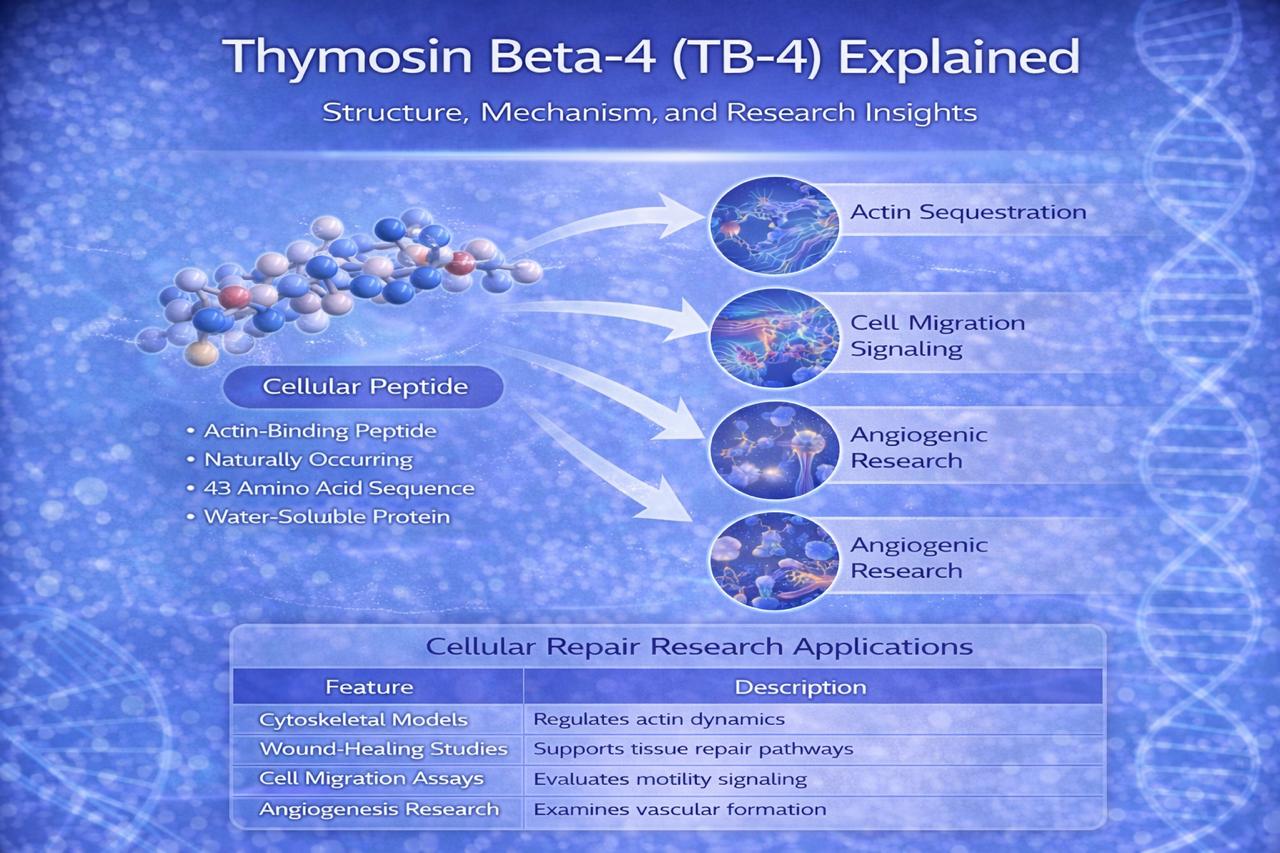
Thymosin Beta-4 is a naturally occurring peptide consisting of 43 amino acids. It is widely distributed in mammalian tissues and is primarily studied for its involvement in:
- Actin binding and sequestration
- Cell migration signaling
- Tissue remodeling pathways
- Angiogenic research models
Because of its multifunctional cellular roles, TB-4 remains an important molecule in regenerative biology research.
Structural Characteristics
TB-4 belongs to the beta-thymosin family of actin-binding peptides. Key structural features include:
- 43–amino acid peptide chain
- Highly conserved actin-binding domain
- Water-soluble intracellular protein
- Broad tissue distribution
Its structure allows it to interact efficiently with G-actin monomers in experimental models.
Proposed Mechanism of Action
Although research is ongoing, several well-supported mechanisms have been identified in laboratory studies.
1. Actin Sequestration
TB-4 is best known for its ability to bind monomeric actin (G-actin), which may:
- Regulate cytoskeletal dynamics
- Influence cell motility
- Support cellular structural organization
This function is central to many TB-4 research applications.
2. Cell Migration Signaling
Preclinical studies suggest TB-4 may influence pathways involved in:
- Cellular movement
- Wound-healing models
- Tissue remodeling processes
Researchers continue to explore these signaling cascades in controlled environments.
3. Angiogenic Pathway Research
TB-4 has been investigated for its potential involvement in:
- Endothelial cell activity
- Vascular signaling pathways
- Microvascular formation models
These observations remain areas of active study.
Areas of Active Research
Current laboratory work involving Thymosin Beta-4 often focuses on:
- Cytoskeletal regulation models
- Tissue repair signaling
- Cell migration assays
- Angiogenesis research
- Peptide delivery systems
Most findings are still preclinical and exploratory.
TB-4 vs. TB-500: Research Context
TB-4 is frequently discussed alongside TB-500, but they are not identical in research usage.
| Feature | TB-4 | TB-500 |
| Nature | Naturally occurring peptide | Synthetic fragment/form |
| Length | 43 amino acids | Shorter active region |
| Research focus | Actin regulation | Systemic distribution studies |
| Common lab interest | Cellular repair pathways | Peptide mobility models |
Understanding this distinction is important for accurate research interpretation.
Research Handling Considerations
For laboratory environments, researchers typically recommend:
- Storage in lyophilized form under cold conditions
- Protection from moisture and light
- Avoiding repeated freeze–thaw cycles
- Using sterile research protocols
Always follow your facility’s peptide handling standards.
Final Thoughts
Thymosin Beta-4 remains a cornerstone peptide in studies involving cytoskeletal dynamics, cellular migration, and tissue signaling. Its well-characterized interaction with actin continues to make it highly relevant in modern peptide research. As scientific exploration progresses, TB-4 is expected to maintain an important role in experimental biology.