Peptide research has expanded into many fields, including metabolic regulation and cellular signaling. One compound that has gained attention in experimental metabolic studies is AOD-9604. Scientists study this peptide for its potential interactions with pathways involved in lipid metabolism and energy regulation.
This article explores the structural characteristics of AOD-9604, its proposed mechanism of action, and the areas where researchers are investigating its biological properties.
Disclaimer: AOD-9604 is intended strictly for laboratory research purposes. It is not approved for human consumption, medical use, or therapeutic applications.
What Is AOD-9604?
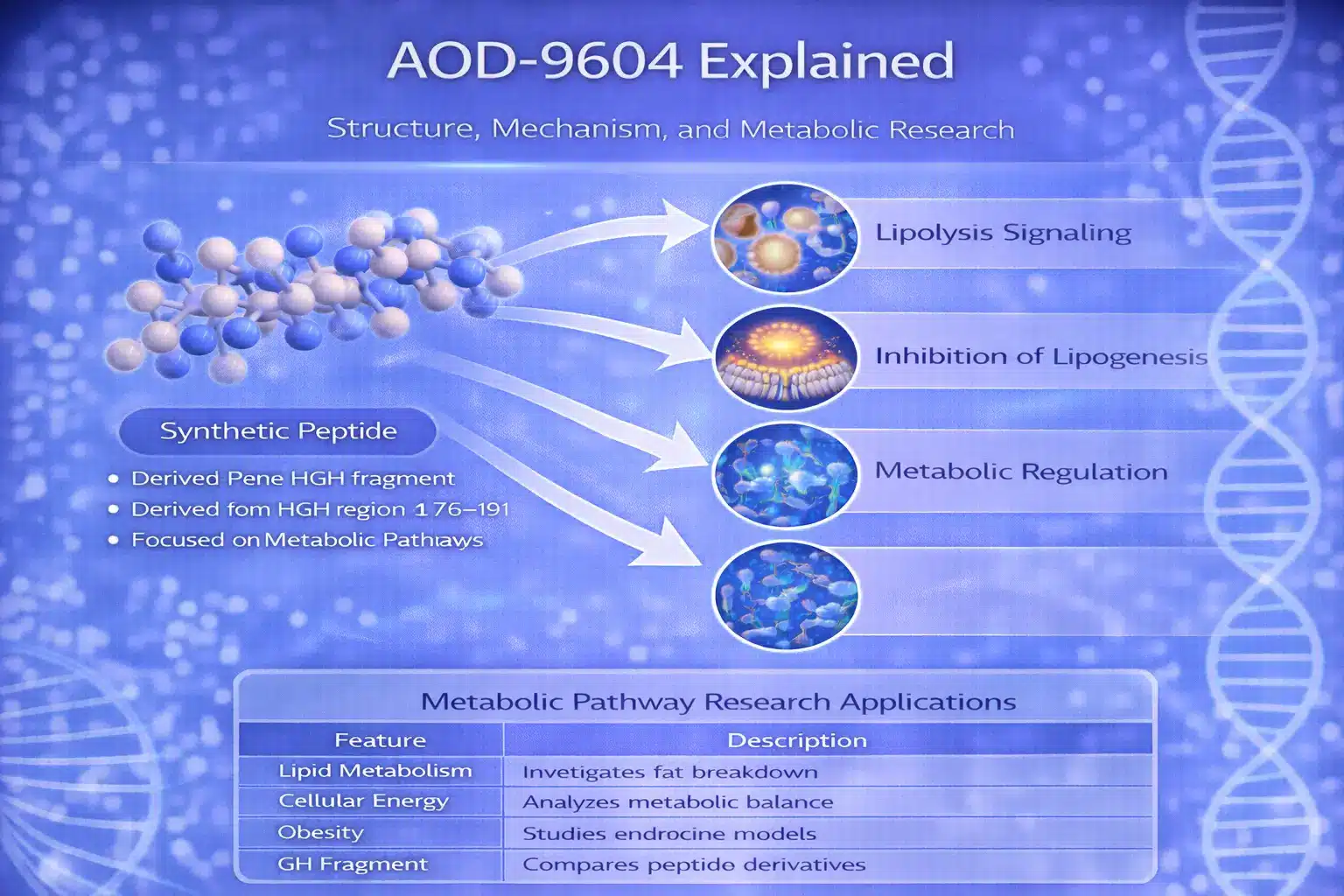
AOD-9604 is a synthetic peptide fragment derived from the C-terminal region of human growth hormone (hGH). Specifically, it represents amino acids 176–191 of the growth hormone sequence.
Researchers developed this peptide fragment to study specific metabolic signaling pathways without activating the broader hormonal effects associated with full-length growth hormone.
Because of this selective design, AOD-9604 is frequently investigated in laboratory models focused on lipid metabolism and metabolic signaling.
Structural Characteristics
AOD-9604 is a modified 16-amino-acid peptide engineered from the growth hormone molecule.
Key structural features include:
- Derived from the lipolytic region of human growth hormone
- Small peptide size that allows efficient research handling
- Modified structure designed to study metabolic signaling pathways
- High-purity synthetic peptide form for laboratory experiments
The peptide’s focused structure enables researchers to explore targeted biological interactions related to metabolic regulation.
Proposed Mechanism of Action
Although research is ongoing, experimental studies suggest that AOD-9604 may interact with metabolic pathways related to lipid breakdown and energy balance.
1. Lipolysis Signaling Pathways
Laboratory research investigates how AOD-9604 may influence pathways associated with lipid metabolism and the breakdown of stored fats in cellular models.
2. Inhibition of Lipogenesis
Some experimental models examine whether the peptide may interact with signaling pathways involved in lipogenesis, the biological process responsible for forming new fat molecules.
3. Metabolic Regulation
Researchers are also studying how AOD-9604 may affect broader metabolic signaling networks that regulate energy utilization and cellular metabolism.
Areas of Active Research
AOD-9604 has been studied in several experimental contexts, including:
- Lipid metabolism research
- Cellular energy regulation studies
- Obesity and metabolic pathway models
- Endocrine signaling investigations
- Comparative studies with growth hormone fragments
- Peptide-based metabolic modulation research
Because of its targeted structure, the peptide is particularly valuable in metabolic pathway analysis.
AOD-9604 vs. Other Metabolic Research Peptides
| Feature | AOD-9604 | MOTS-c | Tesamorelin |
| Research Focus | Lipid metabolism | Mitochondrial signaling | Growth hormone release |
| Molecular Origin | Growth hormone fragment | Mitochondrial peptide | GHRH analog |
| Primary Pathway | Lipolysis signaling | AMPK pathway | GH-IGF axis |
| Peptide Length | 16 amino acids | 16 amino acids | 44 amino acids |
AOD-9604 differs from other peptides because it focuses specifically on growth hormone–derived metabolic signaling pathways.
Laboratory Handling Considerations
In research laboratories, AOD-9604 is typically handled using standard peptide protocols:
- Supplied as a lyophilized powder
- Stored at low temperatures for stability
- Reconstituted using sterile research solvents
- Protected from repeated freeze–thaw cycles
Maintaining these conditions helps ensure consistent experimental results.
Final Thoughts
AOD-9604 represents a focused approach to studying metabolic peptide fragments derived from human growth hormone. By isolating a specific region of the growth hormone molecule, researchers are able to investigate targeted pathways involved in lipid metabolism and energy regulation.
As metabolic research continues to expand, peptides like AOD-9604 remain valuable tools for exploring the complex biological systems that regulate cellular energy balance.