Peptide research continues to uncover new compounds that may influence neurological signaling and molecular pathways in the brain. One such compound that has attracted growing attention in scientific research is N-Acetyl Selank, a modified form of the Selank peptide designed to enhance molecular stability and biological activity.
Due to its structural modifications and interaction with neurological systems, N-Acetyl Selank has become an important subject in laboratory studies investigating cognitive signaling and neurochemical regulation.
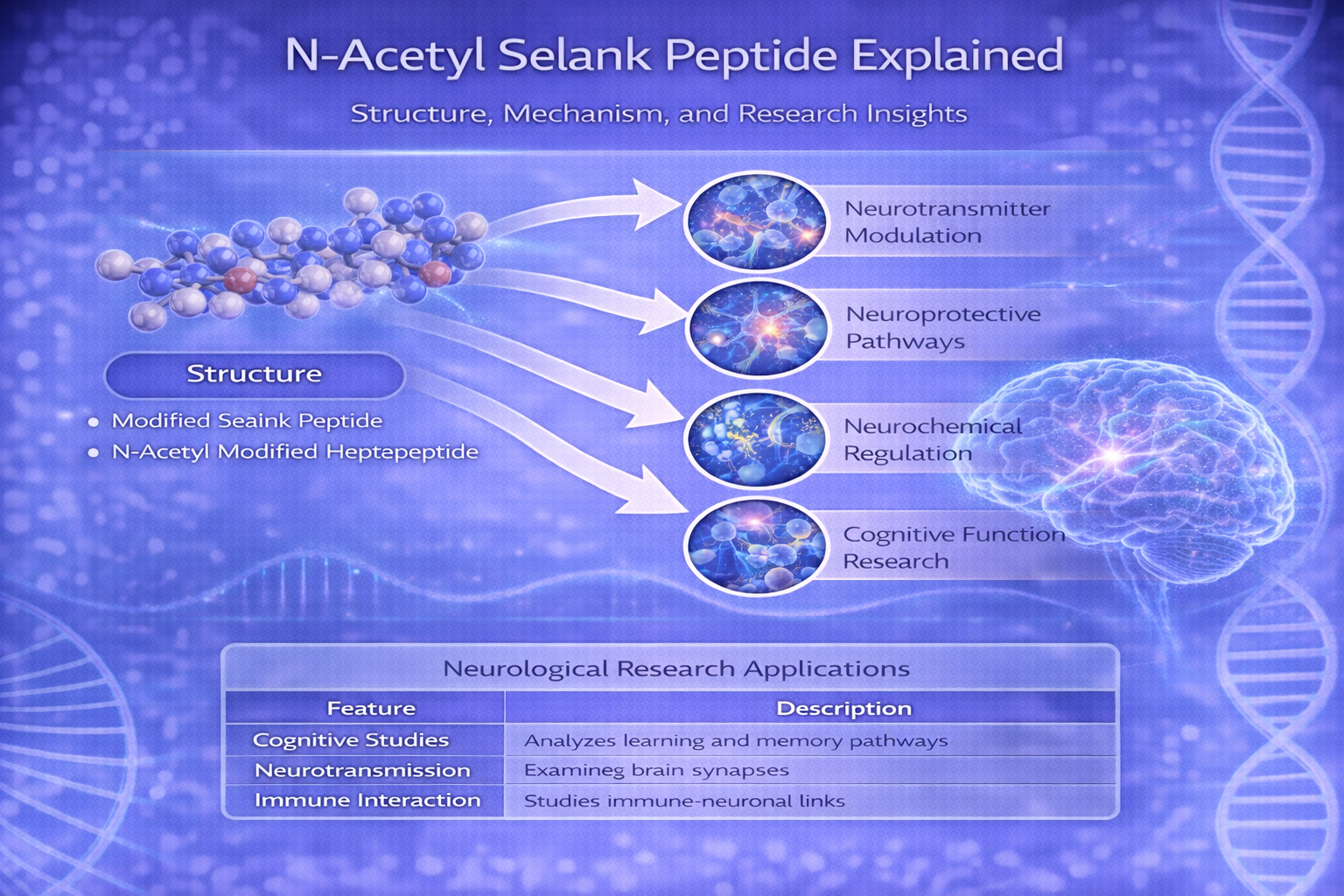
What is N-Acetyl Selank?
N-Acetyl Selank is a synthetic peptide derived from Selank, which itself is based on a fragment of the immune peptide tuftsin. Researchers introduced an N-acetyl modification to the molecule to increase stability and alter how the peptide interacts with biological pathways.
This structural modification allows scientists to study how peptide alterations can affect receptor interaction and molecular signaling in neurological research.
Molecular Structure
N-Acetyl Selank is considered a synthetic heptapeptide with structural modifications designed to improve stability in laboratory environments.
Important structural features include:
- Derived from the Selank peptide sequence
- N-terminal acetylation for improved molecular stability
- Peptide structure designed to interact with neurological signaling systems
These properties make the peptide an interesting compound for researchers studying neuropeptide signaling.
Mechanism of Action in Research Models
Laboratory studies suggest that N-Acetyl Selank may influence several molecular pathways involved in neurological and neurochemical regulation.
Neurotransmitter Modulation
Experimental models have examined whether the peptide may influence neurotransmitter systems including:
- Dopamine
- Serotonin
- Gamma-aminobutyric acid (GABA)
These neurotransmitters are essential components of neural communication and cognitive signaling.
Neuroprotective Signaling
Researchers also investigate whether N-Acetyl Selank interacts with pathways associated with neuronal protection and cellular resilience.
Immune-Neurological Interaction
Because Selank originates from the immune peptide tuftsin, some research models explore the peptide’s potential interaction with immune-related signaling pathways connected to neurological activity.
Research Applications
Due to its unique molecular design, N-Acetyl Selank has been studied in several experimental research areas.
Cognitive Function Research
Scientists explore how the peptide may interact with pathways involved in learning, memory, and cognitive signaling.
Neurochemical Regulation Studies
Laboratory research examines the peptide’s interaction with neurotransmitter systems that influence brain signaling.
Neurobiology Research
Researchers investigate the peptide’s potential effects on neuronal communication and neurochemical balance.
Why Modified Peptides Are Important in Research
Peptide modification is a common strategy used in molecular science to enhance stability and control biological interactions. By altering the structure of naturally occurring peptides, researchers can study how small molecular changes influence receptor binding and signaling pathways.
Compounds like N-Acetyl Selank demonstrate how synthetic peptide design can expand the possibilities of neurological and biochemical research.
Final Thoughts
N-Acetyl Selank represents an interesting development in peptide engineering and neurobiological research. Through structural modification and targeted molecular design, researchers can explore how peptides interact with complex neurological pathways.
As peptide science continues to advance, compounds like N-Acetyl Selank provide valuable insight into the relationship between molecular structure and biological signaling.
Disclaimer
All peptides discussed are intended for laboratory research purposes only. They are not approved for human consumption, medical treatment, or therapeutic use.