Peptide and protein research continues to explore molecules that may influence cellular growth, signaling pathways, and biological regulation. Among the compounds studied in this field is Follistatin 344, a protein-based peptide that has attracted attention in laboratory research focused on cellular signaling and growth-regulation pathways.
Because of its unique interaction with regulatory proteins, Follistatin 344 has become an important subject in scientific research related to molecular biology and protein signaling.
What is Follistatin 344?
Follistatin 344 is a naturally occurring protein fragment derived from the larger follistatin molecule. It is commonly studied in laboratory environments because of its interaction with specific signaling proteins involved in cellular regulation.
Researchers examine Follistatin 344 to better understand how biological systems control growth-related signals and cellular communication.
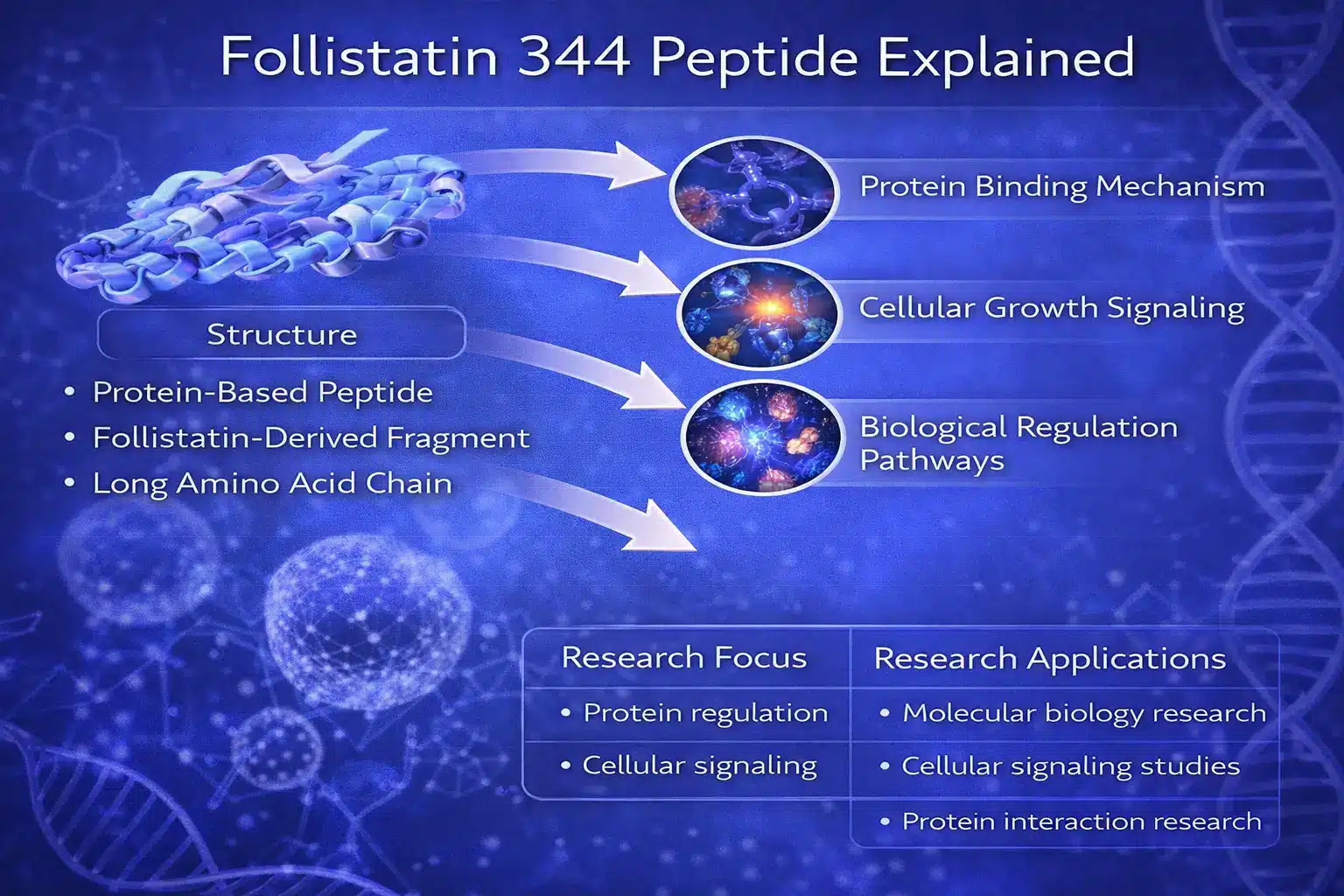
Molecular Structure of Follistatin 344
Follistatin 344 is classified as a protein-based peptide fragment composed of a long chain of amino acids. It belongs to a group of molecules known for their role in regulating biological signaling pathways.
Key structural features include:
- Derived from the follistatin protein
- Long amino acid chain compared to smaller peptides
- Designed for interaction with signaling proteins
- Stable structure for laboratory research applications
These characteristics make it useful for studying molecular regulation in controlled research environments.
Mechanism of Action in Research Models
Laboratory studies suggest that Follistatin 344 may interact with several biological pathways related to cellular signaling and protein regulation.
Protein Binding Mechanism
Follistatin 344 is studied for its ability to interact with specific signaling proteins. Researchers analyze how this interaction may influence molecular communication within cells.
Cellular Growth Signaling
Experimental models explore how the peptide may influence pathways involved in cellular growth and regulation.
Biological Regulation Pathways
Scientists investigate how Follistatin 344 may affect regulatory systems that help control cellular activity and protein signaling.
Research Applications
Due to its molecular properties, Follistatin 344 is studied across multiple research areas.
Molecular Biology Research
Scientists use Follistatin 344 to study how proteins regulate biological processes at the cellular level.
Cellular Signaling Studies
Researchers explore how the peptide interacts with signaling pathways that control biological responses.
Protein Interaction Research
Laboratory research focuses on understanding how protein fragments like Follistatin 344 influence molecular communication inside cells.
Why Regulatory Peptides Are Important in Research
Regulatory peptides play an important role in helping scientists understand how biological systems maintain balance. By studying compounds like Follistatin 344, researchers can examine how cells regulate growth signals and maintain proper biological function.
These studies help expand knowledge in areas such as molecular biology, protein chemistry, and cellular communication.
Final Thoughts
Follistatin 344 remains an important molecule in modern peptide research due to its involvement in protein signaling and biological regulation. Its unique structure and interaction with regulatory pathways make it a valuable compound for laboratory studies.
As scientific research continues to evolve, peptides like Follistatin 344 provide valuable insight into how complex biological systems operate at the molecular level.
Disclaimer
All peptides discussed are intended strictly for laboratory research purposes only. They are not approved for human consumption, medical treatment, or therapeutic use.