
Peptide research continues to expand into areas of cellular signaling, tissue regeneration, and molecular repair processes. One of the most widely studied compounds in this field is GHK-Cu, a naturally occurring copper-binding peptide known for its role in biological signaling and cellular activity.
Due to its unique structure and interaction with metal ions, GHK-Cu has become an important subject in laboratory studies focused on cellular communication, protein regulation, and tissue-related research pathways.
What is GHK-Cu?
GHK-Cu (Glycyl-L-histidyl-L-lysine copper complex) is a naturally occurring tripeptide that binds to copper ions. It was originally identified in human plasma and is also found in saliva and urine.
Researchers study GHK-Cu because of its ability to transport copper ions and interact with biological systems involved in cellular signaling and molecular regulation.
Molecular Structure of GHK-Cu
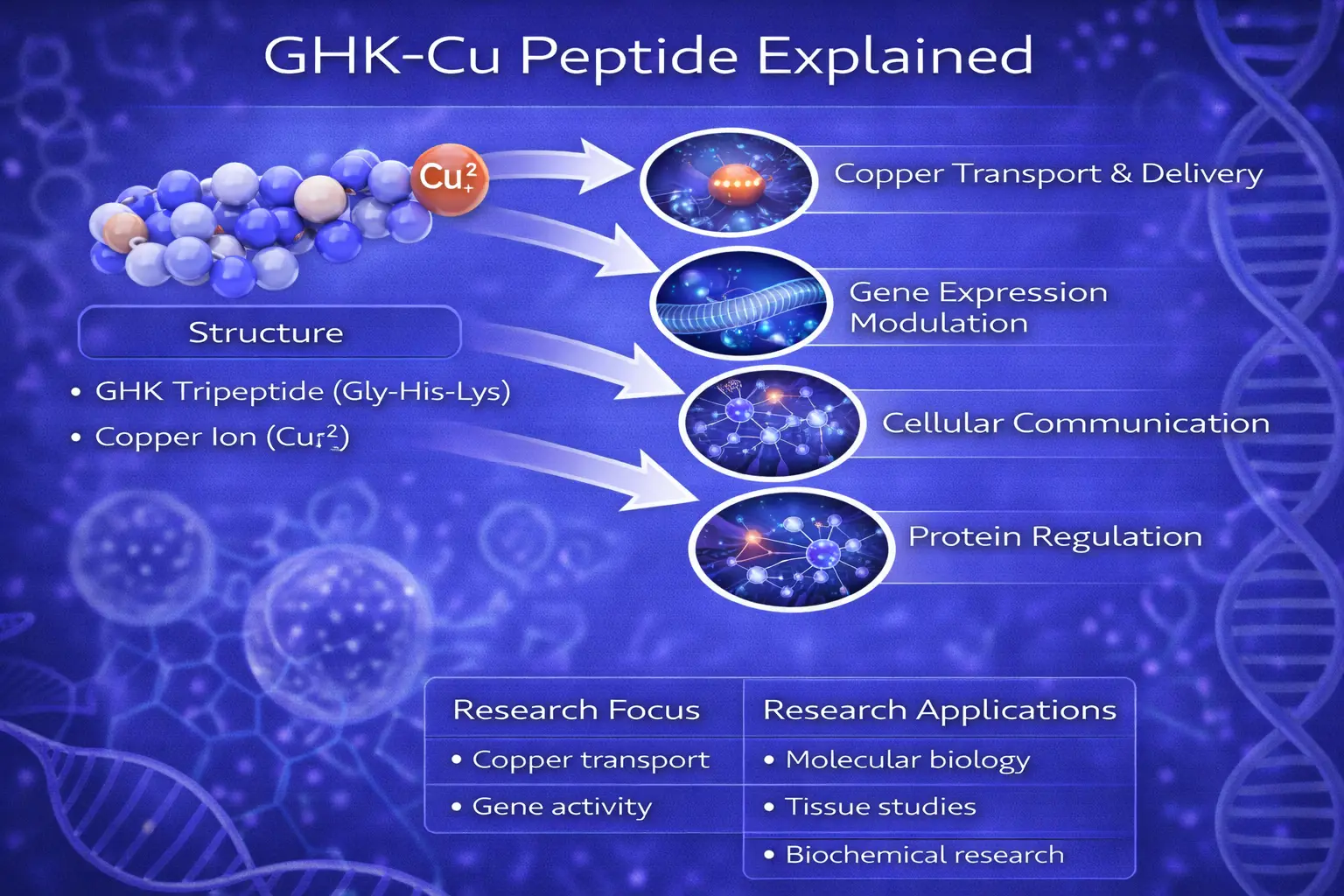
GHK-Cu consists of two main components:
1. GHK Peptide
A short chain of three amino acids:
- Glycine
- Histidine
- Lysine
2. Copper Ion (Cu²⁺)
The peptide binds to a copper ion, forming a stable complex that can interact with biological pathways.
Key structural features include:
- Tripeptide structure (3 amino acids)
- Strong affinity for copper ions
- Stable molecular complex for research applications
Mechanism of Action in Research Models
Laboratory studies suggest that GHK-Cu may influence several biological pathways related to cellular signaling and molecular activity.
Copper Transport and Delivery
GHK-Cu is studied for its role in binding and transporting copper ions, which are essential for various enzymatic processes.
Gene Expression Modulation
Experimental models suggest that the peptide may influence gene expression pathways, affecting how cells respond to environmental signals.
Cellular Communication
Researchers investigate how GHK-Cu interacts with pathways involved in cell signaling and communication.
Protein Regulation
GHK-Cu is also studied for its potential role in regulating proteins involved in cellular function and structure.
Research Applications
Due to its unique properties, GHK-Cu is widely studied in several scientific fields.
Molecular Biology Research
Scientists explore how GHK-Cu influences gene activity and cellular regulation.
Tissue and Cellular Studies
Researchers examine how the peptide interacts with pathways involved in cellular repair and structural organization.
Biochemical Research
GHK-Cu is used in studies focusing on metal ion transport and enzymatic activity.
Importance of Copper Peptides in Research
Copper plays a crucial role in biological systems, acting as a cofactor for many enzymes. Peptides like GHK-Cu help researchers understand how metal ions are transported and utilized within cells.
By studying copper peptides, scientists gain insights into how cellular processes are regulated at the molecular level.
Final Thoughts
GHK-Cu stands out as a unique peptide due to its ability to bind copper and influence multiple biological pathways. Its role in cellular signaling and molecular regulation makes it a valuable compound in modern peptide research.
As research continues, GHK-Cu provides important insights into how small peptide-metal complexes can impact complex biological systems.
Disclaimer
All peptides mentioned are intended strictly for laboratory research purposes only. They are not approved for human consumption, medical use, or therapeutic applications.