Peptide research has recently expanded into the study of mitochondrial-derived peptides, a unique class of molecules that originate from within the mitochondria and play roles in cellular signaling and metabolic regulation. Among these, MOTS-c has emerged as a highly interesting compound in modern biochemical research.
Due to its origin and involvement in metabolic pathways, MOTS-c is widely studied in laboratory settings focused on energy regulation, cellular communication, and mitochondrial function.
What is MOTS-c?
MOTS-c (Mitochondrial Open Reading Frame of the 12S rRNA-c) is a short peptide encoded by mitochondrial DNA, distinguishing it from most peptides that are encoded in the nuclear genome.
This makes MOTS-c part of a unique group of peptides that directly link mitochondrial function to cellular signaling pathways.
Researchers study MOTS-c to understand how mitochondria communicate with the rest of the cell and regulate metabolic processes.
Molecular Structure of MOTS-c
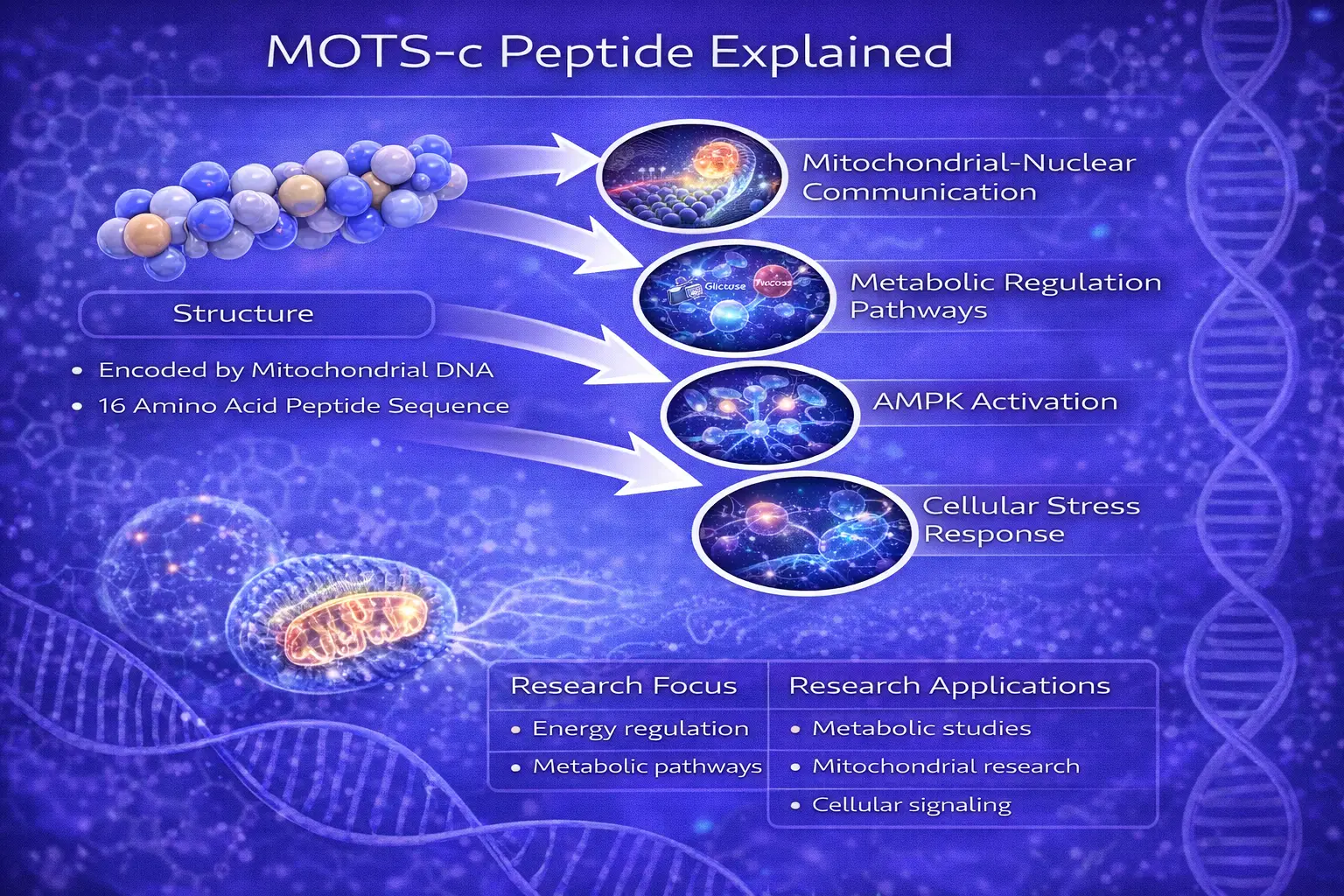
MOTS-c is a small peptide composed of 16 amino acids, encoded within mitochondrial DNA.
Key structural features include:
- Derived from mitochondrial genome (12S rRNA region)
- Short peptide chain (16 amino acids)
- Unique origin compared to nuclear-encoded peptides
This structure allows MOTS-c to function as a signaling molecule between mitochondria and the nucleus.
Mechanism of Action in Research Models
Laboratory studies suggest that MOTS-c may play a role in several biological pathways related to metabolism and cellular regulation.
Mitochondrial-Nuclear Communication
MOTS-c is studied for its role in signaling between mitochondria and the cell nucleus, helping regulate gene expression in response to metabolic conditions.
Metabolic Regulation Pathways
Researchers investigate how MOTS-c interacts with pathways involved in:
- Glucose metabolism
- Energy balance
- Cellular stress responses
AMPK Pathway Interaction
Experimental models suggest that MOTS-c may influence the AMPK (AMP-activated protein kinase) pathway, which plays a key role in energy regulation.
Cellular Stress Response
MOTS-c is also studied for its potential role in helping cells adapt to metabolic stress conditions.
Research Applications
Due to its unique origin and function, MOTS-c is studied across several scientific fields.
Metabolic Research
Scientists explore how MOTS-c influences energy balance and metabolic pathways.
Mitochondrial Biology
Researchers investigate how mitochondrial-derived peptides regulate cellular function and communication.
Cellular Signaling Studies
MOTS-c is used to study how cells respond to metabolic and environmental changes.
Importance of Mitochondrial Peptides
Mitochondrial-derived peptides represent a new frontier in biological research. They provide insight into how mitochondria do more than just produce energy—they also act as signaling hubs that influence cellular behavior.
Studying peptides like MOTS-c helps researchers understand how energy regulation and cellular communication are connected at the molecular level.
Final Thoughts
MOTS-c stands out as a unique peptide due to its mitochondrial origin and role in metabolic signaling pathways. Its involvement in cellular communication and energy regulation makes it a valuable compound in modern peptide research.
As scientific exploration continues, MOTS-c offers important insights into how cells maintain balance and respond to metabolic challenges.
Disclaimer
All peptides mentioned are intended strictly for laboratory research purposes only. They are not approved for human consumption, medical use, or therapeutic applications.