Peptide research continues to explore compounds involved in cellular signaling, biological timing systems, and molecular regulation. One such compound gaining attention in scientific studies is Epithalon (also known as Epitalon), a synthetic peptide modeled after naturally occurring biological regulators.
Due to its interaction with cellular processes and signaling pathways, Epithalon has become an important subject in laboratory research focused on molecular biology and regulatory mechanisms.
What is Epithalon (Epitalon)?
Epithalon is a synthetic peptide derived from a naturally occurring peptide called epithalamin, which is produced in the pineal gland.
It consists of a short chain of amino acids designed to mimic biological signaling molecules involved in cellular regulation. Researchers study Epithalon to understand how peptides influence biological timing systems and molecular processes.
Molecular Structure of Epithalon
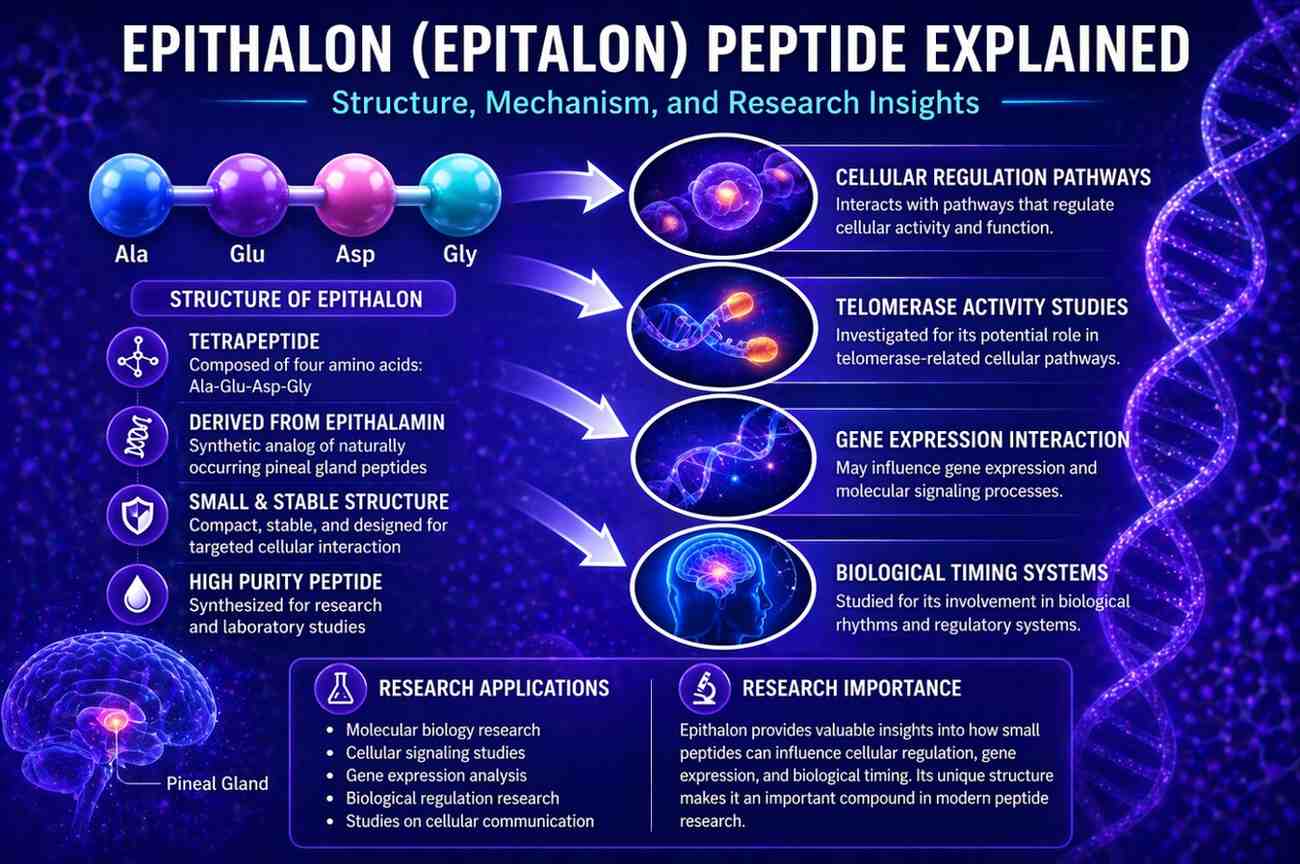
Epithalon is classified as a tetrapeptide, meaning it consists of four amino acids.
Key structural features include:
- Composed of four amino acids (Ala-Glu-Asp-Gly)
- Synthetic analog of naturally occurring peptides
- Small, stable molecular structure
- Designed for interaction with cellular pathways
Its compact structure allows for precise study of peptide signaling in research models.
Mechanism of Action in Research Models
Laboratory studies suggest that Epithalon may influence several biological pathways related to cellular regulation and signaling.
Cellular Regulation Pathways
Researchers investigate how Epithalon interacts with pathways that regulate cellular activity and function.
Telomerase Activity Studies
Experimental models explore how the peptide may influence telomerase-related pathways, which are associated with cellular replication processes.
Gene Expression Interaction
Epithalon is studied for its potential role in influencing gene expression and molecular signaling pathways.
Biological Timing Systems
Because of its origin in pineal gland research, Epithalon is also studied in relation to biological rhythms and regulatory systems.
Research Applications
Due to its unique properties, Epithalon is studied across multiple scientific areas.
Molecular Biology Research
Scientists use Epithalon to investigate cellular regulation and gene expression.
Cellular Signaling Studies
Researchers explore how peptides influence communication between cells.
Biological Regulation Research
Epithalon is used in studies examining regulatory systems within the body, including timing and signaling pathways.
Importance of Regulatory Peptides
Regulatory peptides play a crucial role in maintaining balance within biological systems. By studying compounds like Epithalon, researchers can better understand how cells control growth, communication, and response to environmental signals.
These insights contribute to a deeper understanding of molecular biology and cellular function.
Final Thoughts
Epithalon stands out as a compact yet powerful peptide in research due to its involvement in cellular regulation and signaling pathways. Its simple structure and targeted activity make it a valuable compound for studying complex biological systems.
As peptide research continues to advance, Epithalon provides important insights into how small molecules can influence large-scale biological processes.
Disclaimer
All peptides mentioned are intended strictly for laboratory research purposes only. They are not approved for human consumption, medical use, or therapeutic applications.