Peptide research continues to expand into molecular targeting, cellular signaling, and protein interaction systems. One peptide that has gained increasing attention in laboratory studies is PNC-27, a synthetic peptide studied for its interaction with cellular membrane signaling and molecular communication pathways.
Due to its engineered structure and targeted biological interactions, PNC-27 has become a subject of growing interest in experimental peptide research.
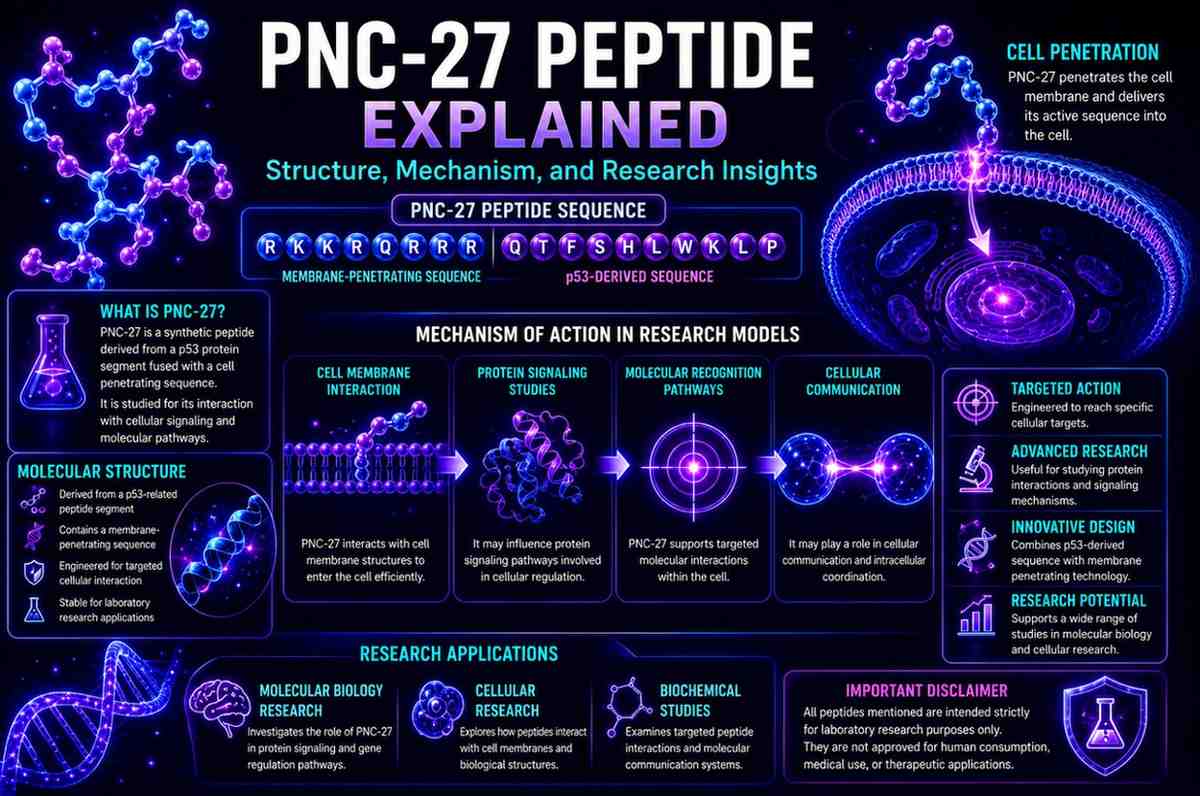
What is PNC-27 Peptide?
PNC-27 is a synthetic research peptide engineered from a segment of the p53 protein, combined with a membrane-penetrating peptide sequence.
Researchers study PNC-27 to understand how peptide-based molecular targeting systems interact with cellular structures and signaling pathways in controlled laboratory settings.
Its design makes it particularly useful for investigating peptide-cell membrane interactions and molecular communication systems.
Molecular Structure of PNC-27
PNC-27 features a specialized peptide structure designed for research applications.
Key structural features include:
- Derived from a p53-related peptide segment
- Includes a membrane-penetrating sequence
- Engineered for targeted cellular interaction
- Stable for experimental research environments
These characteristics make PNC-27 valuable for studying molecular recognition and peptide-based signaling.
Mechanism of Action in Research Models
Laboratory studies suggest that PNC-27 may influence pathways related to cellular communication and membrane interaction.
Cell Membrane Interaction
Researchers investigate how PNC-27 interacts with cell membrane structures in experimental models.
Protein Signaling Studies
Experimental research explores the peptide’s interaction with protein communication systems involved in cellular regulation.
Molecular Recognition Pathways
Scientists study how PNC-27 may support targeted molecular interaction mechanisms.
Cellular Communication
Research models examine the peptide’s role in biological signaling and intracellular coordination.
Research Applications
Due to its engineered structure, PNC-27 is studied in several scientific disciplines.
Molecular Biology Research
Scientists investigate how PNC-27 influences protein signaling and cellular communication.
Cellular Research
Researchers explore how peptides interact with cell membranes and biological structures.
Biochemical Studies
PNC-27 is studied in laboratory environments examining targeted peptide signaling systems.
Importance of Engineered Research Peptides
Engineered peptides help researchers better understand how molecular targeting systems regulate communication within biological environments.
By studying compounds like PNC-27, scientists gain valuable insights into peptide design, cellular interaction, and signaling pathways.
Final Thoughts
PNC-27 represents an advanced area of peptide research focused on molecular targeting and biological signaling. Its engineered structure and research relevance make it valuable for studying complex cellular communication systems.
As peptide science continues to evolve, PNC-27 contributes to a deeper understanding of how targeted peptides interact with biological structures and signaling networks.
Disclaimer
All peptides mentioned are intended strictly for laboratory research purposes only. They are not approved for human consumption, medical use, or therapeutic applications.