Peptide research continues to explore specialized fragments of larger proteins to better understand targeted biological signaling. One such compound is AOD-9604, a modified peptide fragment derived from human growth hormone (HGH), studied in laboratory environments for its interaction with metabolic pathways.
Due to its specific structural design and selective activity, AOD-9604 has become a subject of interest in research focused on metabolic signaling and molecular regulation.
What is AOD-9604?
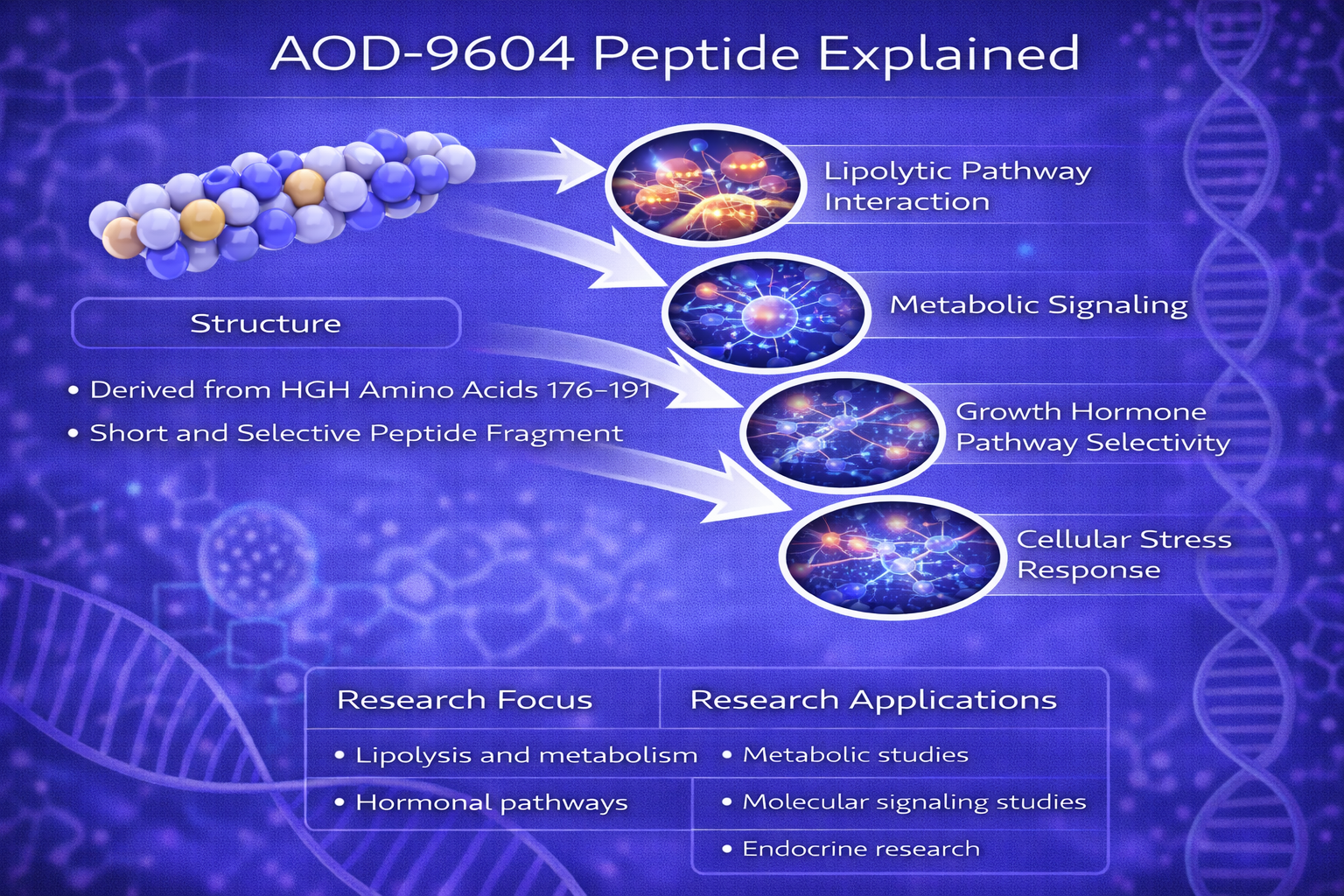
AOD-9604 is a synthetic peptide fragment derived from the C-terminal region of human growth hormone (HGH). It consists of amino acids 176–191 of the HGH molecule, a region associated with specific metabolic functions in research studies.
Unlike the full HGH protein, AOD-9604 is designed to isolate targeted biological activity while minimizing broader systemic interactions in experimental models.
Molecular Structure of AOD-9604
AOD-9604 is a modified peptide fragment with structural features tailored for research applications.
Key characteristics include:
- Derived from HGH amino acids 176–191
- Short peptide chain (16 amino acids)
- Structurally modified for stability
- Designed for selective pathway interaction
These features allow researchers to study specific signaling pathways without the complexity of full-length proteins.
Mechanism of Action in Research Models
Laboratory studies suggest that AOD-9604 may interact with pathways involved in metabolic signaling and cellular regulation.
Lipolytic Pathway Interaction
Researchers investigate how AOD-9604 may influence lipolysis-related signaling pathways, which are involved in the breakdown of stored lipids in experimental systems.
Metabolic Signaling
Experimental models explore how the peptide interacts with metabolic pathways, helping researchers understand how cells regulate energy usage.
Growth Hormone Pathway Selectivity
Unlike full HGH, AOD-9604 is studied for its selective activity, focusing on specific pathways without activating broader growth-related signaling.
Research Applications
Due to its targeted design, AOD-9604 is studied in several scientific areas.
Metabolic Research
Scientists examine how AOD-9604 influences energy regulation and metabolic pathways.
Molecular Biology Studies
Researchers explore how peptide fragments derived from larger proteins affect cellular signaling and gene expression.
Endocrine Research
AOD-9604 is used in studies analyzing hormone-related signaling mechanisms in controlled environments.
Importance of Peptide Fragments in Research
Peptide fragments like AOD-9604 allow researchers to isolate specific regions of larger proteins and study their individual effects. This targeted approach helps scientists better understand how complex biological systems function at a molecular level.
By focusing on smaller segments, researchers can analyze precise signaling interactions without interference from unrelated pathways.
Final Thoughts
AOD-9604 represents a focused approach in peptide research, offering insight into how specific regions of larger proteins contribute to biological signaling. Its selective design makes it a valuable tool for studying metabolic pathways and cellular regulation.
As peptide science continues to evolve, compounds like AOD-9604 help researchers uncover the detailed mechanisms behind complex biological processes.
Disclaimer
All peptides mentioned are intended strictly for laboratory research purposes only. They are not approved for human consumption, medical use, or therapeutic applications.