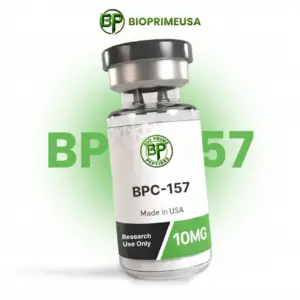
Peptide research continues to uncover compounds that play roles in cellular signaling, tissue interaction, and molecular regulation. One of the most widely discussed peptides in scientific research is BPC-157, a synthetic peptide derived from naturally occurring proteins.
Due to its stability and interaction with multiple biological pathways, BPC-157 has become a significant subject in laboratory studies focused on cellular communication and molecular signaling.
What is BPC-157?
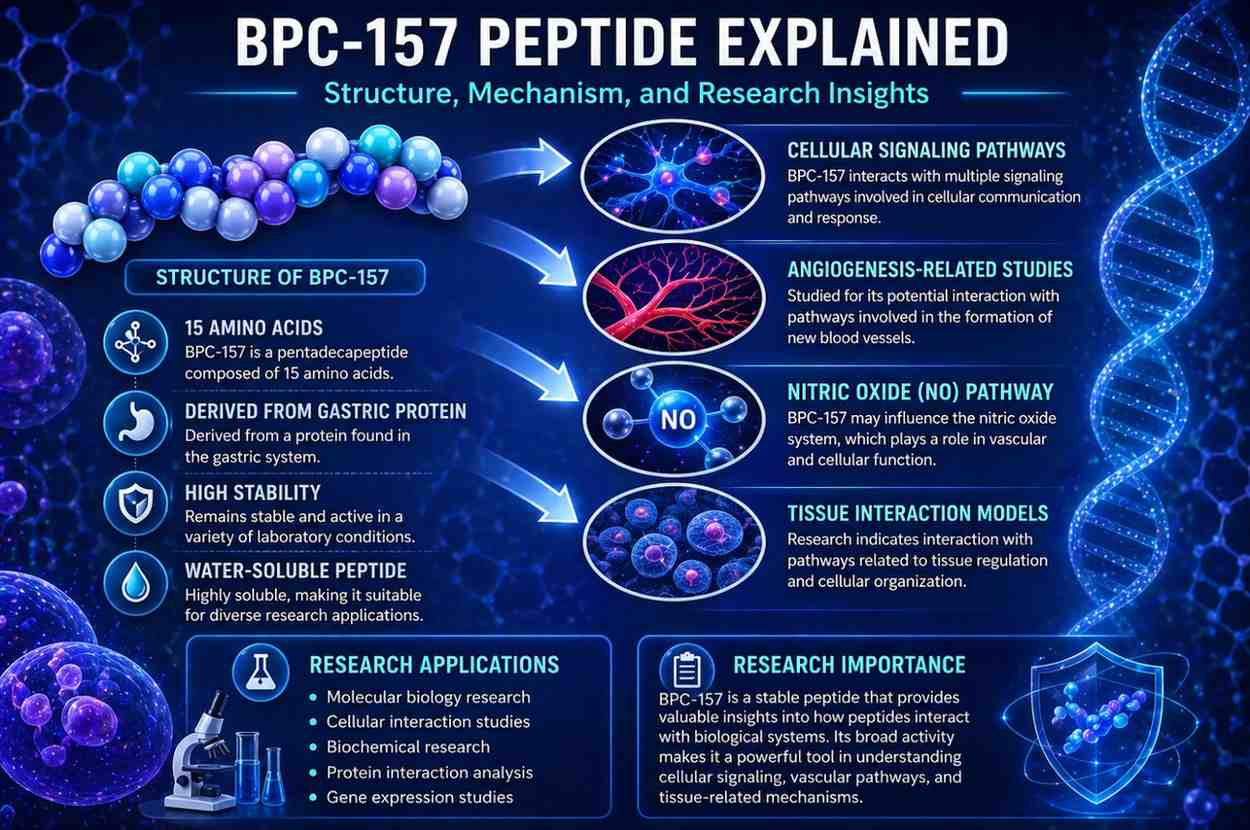
BPC-157 (Body Protection Compound-157) is a synthetic peptide derived from a protein found in the gastric system. It consists of a sequence of 15 amino acids and is studied in controlled environments for its interaction with biological pathways.
Researchers are particularly interested in BPC-157 because of its stability and its ability to remain active under various laboratory conditions.
Molecular Structure of BPC-157
BPC-157 is classified as a pentadecapeptide, meaning it contains 15 amino acids.
Key structural features include:
- Composed of 15 amino acids
- Derived from gastric protein sequences
- High stability in laboratory conditions
- Water-soluble peptide
These properties make BPC-157 suitable for a wide range of experimental applications.
Mechanism of Action in Research Models
Laboratory studies suggest that BPC-157 may interact with several biological pathways related to cellular signaling and molecular regulation.
Cellular Signaling Pathways
Researchers investigate how BPC-157 influences cellular communication systems and signaling pathways.
Angiogenesis-Related Studies
Experimental models explore how the peptide may interact with pathways involved in angiogenesis (formation of new blood vessels).
Nitric Oxide (NO) Pathway Interaction
BPC-157 is studied for its potential interaction with the nitric oxide (NO) system, which plays a role in cellular signaling and vascular function.
Tissue Interaction Models
Researchers examine how BPC-157 interacts with biological systems involved in cellular organization and response mechanisms.
Research Applications
Due to its broad activity, BPC-157 is studied in several scientific fields.
Molecular Biology Research
Scientists explore how BPC-157 influences gene expression and cellular signaling pathways.
Cellular Interaction Studies
Researchers investigate how the peptide affects cell communication and response to stimuli.
Biochemical Research
BPC-157 is used in studies focusing on protein interaction and signaling mechanisms.
Importance of Stable Peptides in Research
Stable peptides like BPC-157 are valuable because they allow researchers to study biological processes over extended periods without rapid degradation. This stability provides more consistent and reliable experimental results.
Understanding how such peptides interact with biological systems helps advance knowledge in molecular biology and cellular function.
Final Thoughts
BPC-157 remains a key peptide in modern research due to its stability and interaction with multiple biological pathways. Its ability to influence signaling systems makes it a valuable compound for studying complex cellular processes.
As peptide research continues to grow, BPC-157 contributes to a deeper understanding of how small molecules interact within biological systems.
Disclaimer
All peptides mentioned are intended strictly for laboratory research purposes only. They are not approved for human consumption, medical use, or therapeutic applications.