Peptide research has introduced numerous compounds that may influence neurological signaling and physiological regulation. Among these molecules is DSIP (Delta Sleep-Inducing Peptide), a naturally occurring neuropeptide that has been widely studied for its potential involvement in sleep regulation and neuroendocrine activity.
Since its discovery, DSIP has become a subject of interest in laboratory studies exploring sleep cycles, stress response pathways, and neurochemical signaling.
What is DSIP?
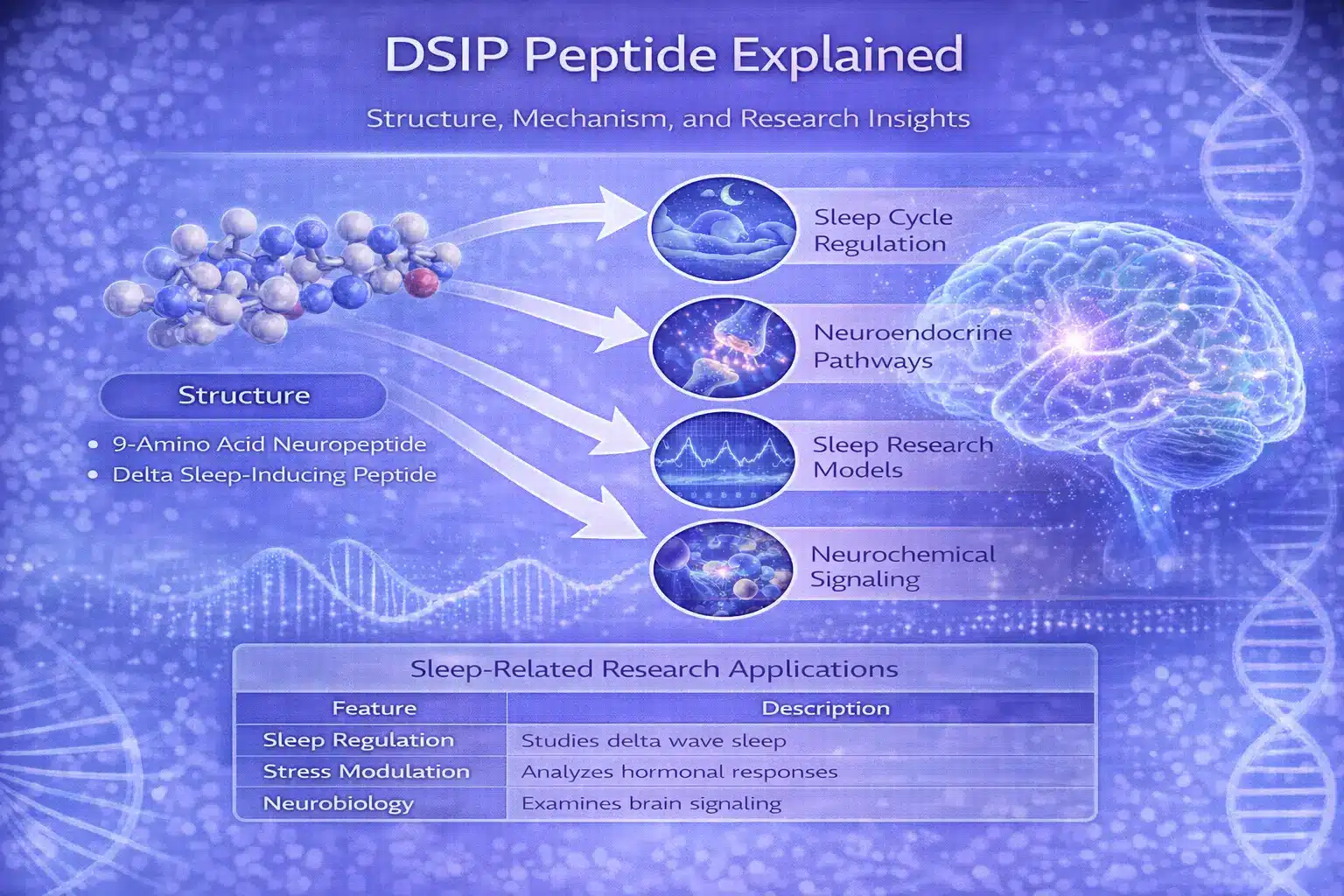
Delta Sleep-Inducing Peptide (DSIP) is a naturally occurring peptide originally discovered in studies examining sleep physiology. Researchers identified the compound while investigating factors associated with delta wave sleep, which represents the deepest stage of the sleep cycle.
DSIP is composed of nine amino acids, making it a relatively small peptide with the potential to interact with various neurological signaling pathways.
Because of its structure and biological activity, DSIP has been investigated in experimental models focusing on sleep regulation and neuroendocrine responses.
Molecular Structure of DSIP
DSIP is classified as a nonapeptide, meaning it consists of nine amino acids arranged in a specific sequence.
Key structural characteristics include:
- A short peptide chain of nine amino acids
- Water-soluble molecular properties
- Structural compatibility with neurological signaling pathways
These features make DSIP an interesting compound for researchers studying neuropeptide activity and physiological regulation.
Mechanism of Action in Research Models
Although the exact biological mechanism of DSIP is still being studied, several research models suggest that the peptide may influence neurological and endocrine pathways.
Sleep Regulation Pathways
DSIP has been investigated for its potential involvement in delta sleep regulation, which is associated with deep restorative sleep cycles.
Neuroendocrine Signaling
Some studies suggest that DSIP may interact with the hypothalamic-pituitary axis, potentially influencing hormonal signaling pathways.
Stress Response Modulation
Researchers have explored whether DSIP interacts with stress-related pathways that influence cortisol and other neurochemical signals.
Neurotransmitter Interaction
Experimental research has examined the peptide’s potential role in regulating neurotransmitters involved in sleep and neurological balance.
Potential Research Applications
Due to its interaction with neurological pathways, DSIP has been studied in several scientific research areas.
Sleep Research
Scientists investigate DSIP in experimental models to better understand sleep architecture and circadian rhythms.
Neurobiology Studies
Researchers explore how DSIP interacts with neuronal signaling pathways and brain activity patterns.
Stress and Hormonal Research
Studies examine how the peptide may influence stress response systems and endocrine signaling.
Neurochemical Regulation
DSIP has been studied in laboratory models analyzing the balance of neurotransmitters involved in sleep and cognitive processes.
Why Sleep-Related Peptides Are Important in Research
Sleep plays a critical role in maintaining physiological balance, cognitive performance, and metabolic regulation. Peptides like DSIP help researchers investigate how the body controls sleep cycles and neurological recovery processes.
By studying sleep-associated peptides, scientists can better understand:
- Circadian rhythm regulation
- Neurochemical balance
- Hormonal signaling pathways
- Brain recovery mechanisms during sleep
Final Thoughts
DSIP remains a fascinating neuropeptide that continues to attract attention in sleep and neurological research. Its potential role in sleep regulation and neuroendocrine signaling makes it a valuable compound for scientists studying the biological mechanisms that control rest, recovery, and brain function.
As peptide science continues to advance, compounds like DSIP contribute to a deeper understanding of how small molecular structures may influence complex physiological systems.
Disclaimer
All peptides mentioned are intended for laboratory research purposes only. They are not approved for human consumption, medical use, or therapeutic applications.