Peptide research continues to explore compounds involved in cellular communication, genetic regulation, and biological signaling pathways. Among the peptides attracting scientific interest is Epithalon, a synthetic tetrapeptide studied in laboratory settings for its interaction with cellular regulatory systems and molecular signaling mechanisms.
Due to its unique structure and association with cellular biology research, Epithalon has become an important compound in studies investigating peptide-based signaling and biological regulation.
What is Epithalon?
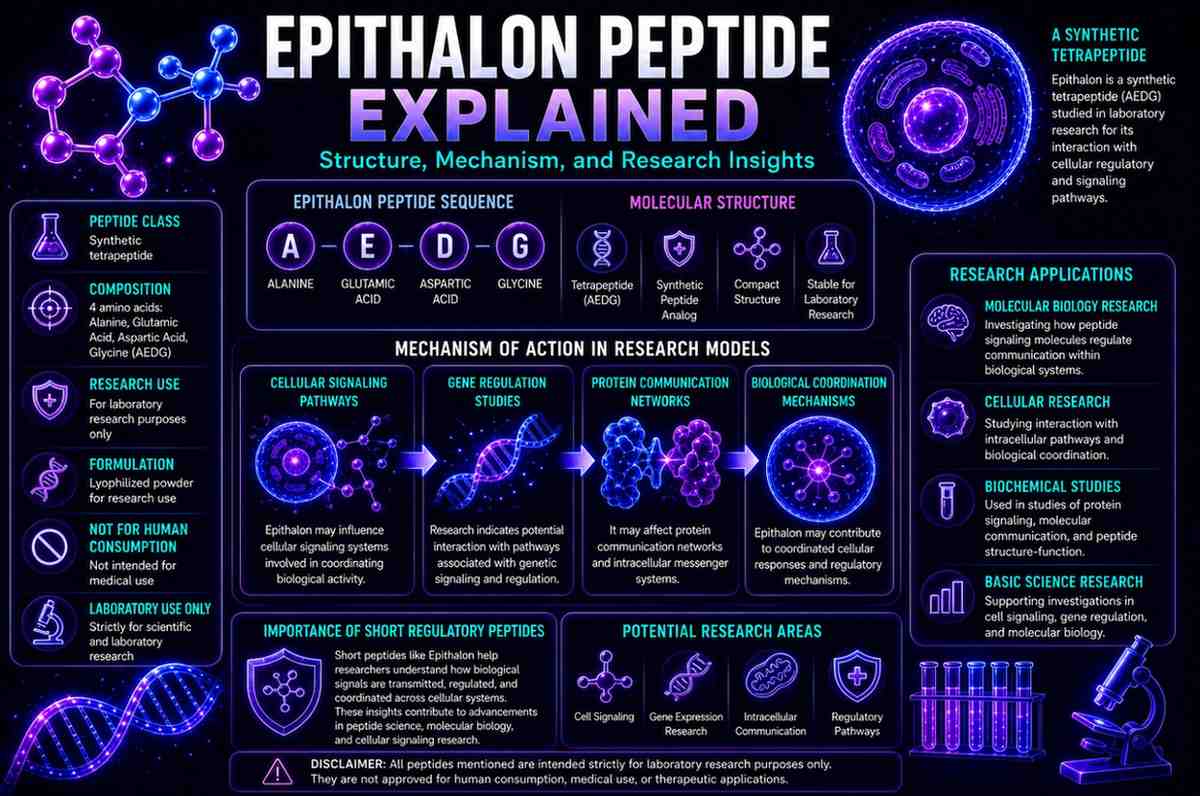
Epithalon is a synthetic tetrapeptide composed of four amino acids: Alanine–Glutamic Acid–Aspartic Acid–Glycine (AEDG).
It was developed as a synthetic analog of naturally occurring peptide extracts associated with cellular signaling research. Scientists study Epithalon to better understand how small peptides interact with biological communication systems and intracellular pathways.
Its compact structure makes it a valuable tool in molecular biology research.
Molecular Structure of Epithalon
Epithalon belongs to the category of tetrapeptides, meaning it contains four amino acids.
Key Structural Features
- Composed of four amino acids (AEDG)
- Synthetic peptide analog
- Compact molecular structure
- Suitable for laboratory signaling studies
- Stable under controlled research conditions
These characteristics make Epithalon useful for investigating peptide-driven biological processes.
Mechanism of Action in Research Models
Laboratory studies suggest that Epithalon may interact with several pathways involved in cellular communication and molecular regulation.
Cellular Signaling Pathways
Researchers investigate how Epithalon influences signaling systems responsible for coordinating biological activity between cells.
Gene Regulation Studies
Experimental models explore how the peptide may interact with pathways associated with genetic signaling and cellular regulation.
Protein Communication Networks
Scientists study the peptide’s role in molecular communication systems involving proteins and intracellular messengers.
Biological Coordination Mechanisms
Research continues to examine how small peptides contribute to coordinated cellular responses and regulatory signaling.
Research Applications
Due to its unique molecular profile, Epithalon is studied across several scientific disciplines.
Molecular Biology Research
Scientists investigate how peptide signaling molecules regulate communication within biological systems.
Cellular Research
Researchers study Epithalon’s interaction with intracellular pathways and biological coordination mechanisms.
Biochemical Studies
The peptide is used in laboratory models focused on protein signaling, molecular communication, and peptide structure-function relationships.
Importance of Short Regulatory Peptides
Short peptides play an important role in research because they allow scientists to investigate how biological signals are transmitted, regulated, and coordinated.
Studying compounds like Epithalon helps researchers gain deeper insights into cellular communication systems and molecular regulation processes.
Final Thoughts
Epithalon remains an interesting subject in peptide science due to its compact structure and role in biological signaling research. Its relevance in studies involving cellular communication and molecular regulation continues to make it a valuable research peptide.
As peptide research advances, Epithalon contributes to a broader understanding of how signaling molecules influence complex biological systems.
Disclaimer
All peptides mentioned are intended strictly for laboratory research purposes only. They are not approved for human consumption, medical use, or therapeutic applications.