Peptide research continues to expand our understanding of endocrine signaling and neurohormonal communication. Among the peptides studied in laboratory environments, Kisspeptin has gained notable attention for its involvement in reproductive hormone regulation pathways.
This article explores Kisspeptin’s structure, its mechanism of action, and areas where it is actively studied in research settings.
What Is Kisspeptin?
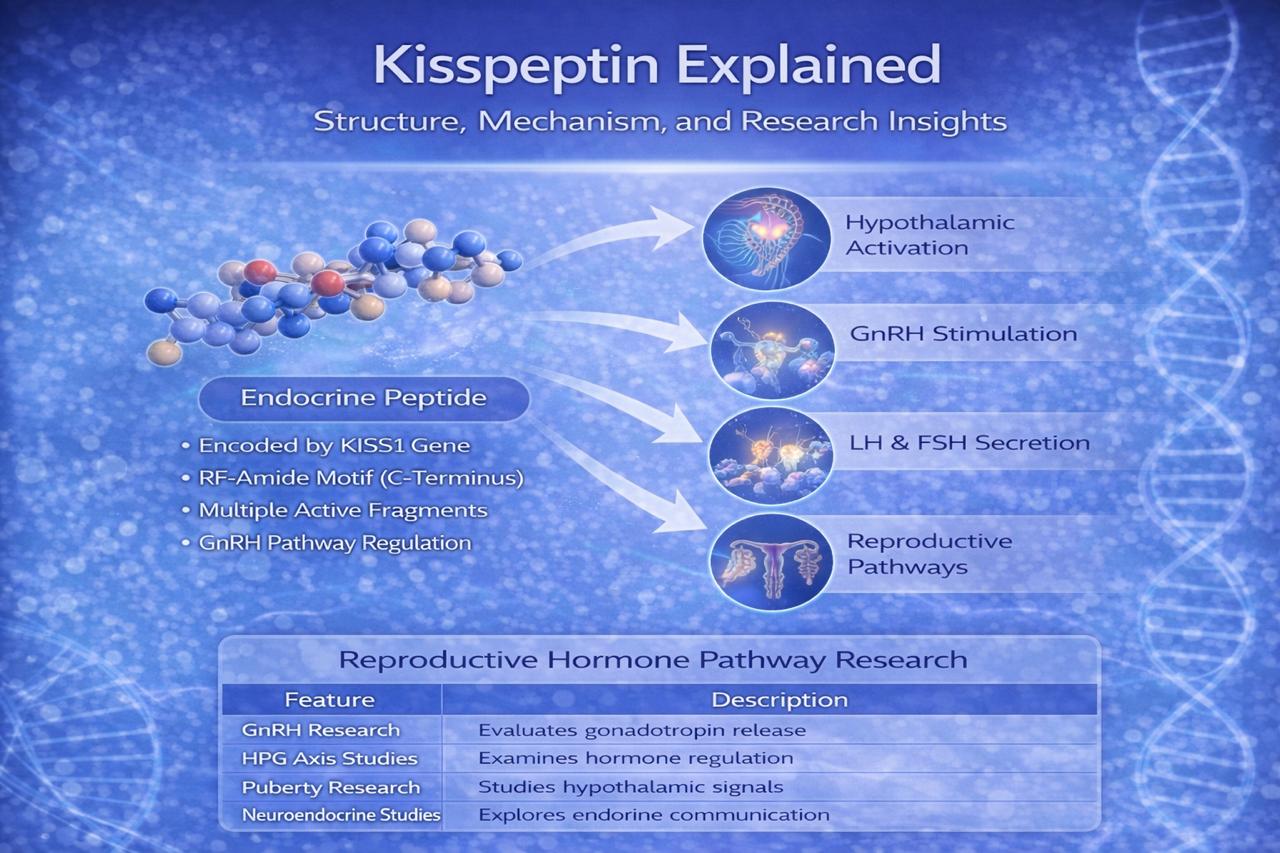
Kisspeptin is a naturally occurring peptide encoded by the KISS1 gene. It plays a key signaling role in the hypothalamic-pituitary-gonadal (HPG) axis in experimental models.
Several active fragments exist, including:
- Kisspeptin-54
- Kisspeptin-14
- Kisspeptin-13
- Kisspeptin-10
Among these, shorter fragments like Kisspeptin-10 are frequently used in laboratory research due to their strong receptor activity.
Structural Characteristics
Kisspeptin peptides vary in length but share a common RF-amide motif at the C-terminal end, which is critical for receptor binding.
Key structural features:
- Derived from the KISS1 precursor protein
- High receptor specificity
- Water-soluble peptide structure
- Active C-terminal sequence required for function
These characteristics make Kisspeptin a valuable model for studying neuroendocrine signaling.
Mechanism of Action
In laboratory studies, Kisspeptin primarily acts through the GPR54 receptor (also known as the Kiss1 receptor).
Mechanistic Pathway
- Hypothalamic Activation
Kisspeptin binds to GPR54 receptors located on GnRH neurons. - GnRH Stimulation
This interaction stimulates the release of gonadotropin-releasing hormone (GnRH). - Pituitary Response
GnRH then promotes secretion of:
- Luteinizing hormone (LH)
- Follicle-stimulating hormone (FSH)
- Downstream Endocrine Effects
These hormones influence reproductive endocrine pathways in research models.
Areas of Research Interest
In peptide and endocrine research, Kisspeptin is commonly investigated in:
- Hypothalamic signaling studies
- Reproductive hormone pathway research
- GnRH neuron activation models
- Puberty onset research
- Neuroendocrine communication studies
Its central regulatory role makes Kisspeptin one of the most studied peptides in reproductive endocrinology research.
Stability and Handling in Research
Kisspeptin used in laboratory settings is typically supplied in lyophilized powder form to preserve stability.
Standard research handling includes:
- Storage at recommended low temperatures
- Reconstitution with sterile laboratory solvents
- Protection from excessive heat and light
- Avoidance of repeated freeze-thaw cycles
Proper peptide handling helps maintain consistent experimental outcomes.
Why Researchers Study Kisspeptin
Scientific interest in Kisspeptin continues to grow because of its:
- Direct role in GnRH regulation
- High receptor specificity
- Central position in the HPG axis
- Well-characterized signaling pathway
These features make it a powerful tool in neuroendocrine and reproductive research models.
Final Thoughts
Kisspeptin remains a pivotal peptide in modern endocrine research. Its ability to regulate upstream reproductive signaling pathways provides researchers with valuable insights into neurohormonal communication and hormonal cascade dynamics.
As peptide science advances, Kisspeptin continues to be an important focus in studies exploring the complexity of the hypothalamic-pituitary-gonadal axis.
Disclaimer:
For laboratory research use only. Not for human consumption. This product is not intended to diagnose, treat, cure, or prevent any disease.