Mitochondrial-derived peptides have opened a new frontier in metabolic and cellular signaling research. Among these emerging compounds, MOTS-c has gained significant attention for its potential role in energy regulation and metabolic homeostasis. This article explores MOTS-c’s structure, proposed mechanisms, and current research directions.
Note: MOTS-c is intended for research use only. It is not approved for human consumption or medical treatment.
What Is MOTS-c?
MOTS-c (Mitochondrial Open Reading Frame of the 12S rRNA-c) is a short peptide encoded within mitochondrial DNA. Unlike most peptides that are encoded in the nuclear genome, MOTS-c originates from mitochondrial genetic material, making it particularly unique in cellular biology research.
Researchers study MOTS-c primarily for its involvement in:
- Cellular energy regulation
- Metabolic pathway signaling
- Insulin sensitivity models
- Stress adaptation mechanisms
Its mitochondrial origin has made it a key focus in metabolic and aging research.
Structural Characteristics
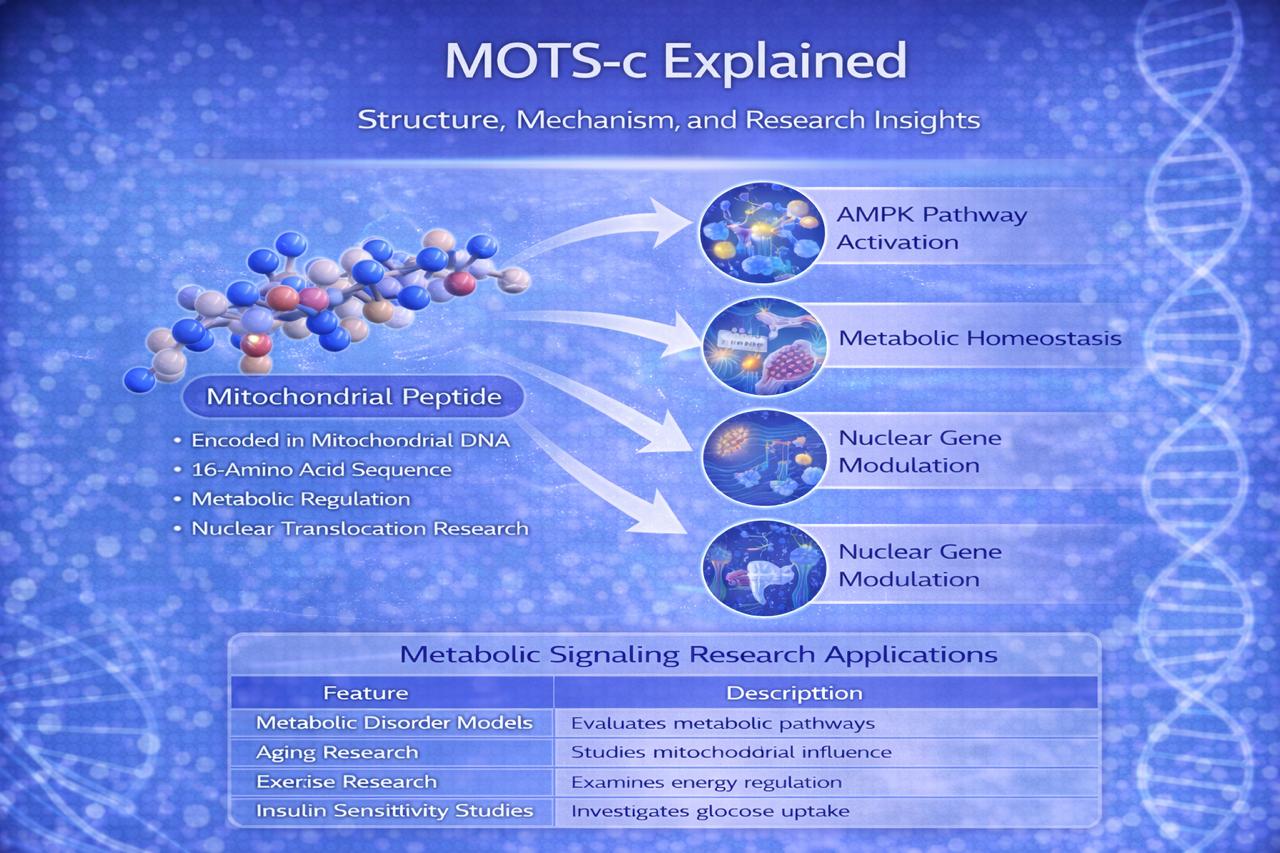
MOTS-c is a 16–amino acid peptide derived from the mitochondrial 12S rRNA region. Key features include:
- Mitochondrial genome encoding
- Short peptide sequence (16 amino acids)
- Cytoplasmic and nuclear translocation capability (in research models)
- Involvement in metabolic gene regulation
These structural properties allow it to participate in intracellular signaling studies.
Proposed Mechanism of Action
Although research is still evolving, several mechanisms have been proposed in laboratory studies.
1. AMPK Pathway Activation
One of the most studied mechanisms involves:
- Activation of AMP-activated protein kinase (AMPK)
- Influence on glucose uptake pathways
- Regulation of cellular energy balance
AMPK is widely studied as a master regulator of metabolism.
2. Metabolic Homeostasis Signaling
Preclinical research suggests MOTS-c may:
- Improve insulin signaling models
- Influence lipid metabolism pathways
- Support adaptive responses to metabolic stress
These findings are being explored in controlled experimental settings.
3. Nuclear Gene Expression Modulation
Emerging studies indicate MOTS-c may translocate to the nucleus under stress conditions and influence:
- Metabolic gene expression
- Stress-response transcription factors
- Cellular adaptation mechanisms
This dual mitochondrial–nuclear signaling dynamic makes MOTS-c particularly intriguing.
Areas of Active Research
Current laboratory research involving MOTS-c often focuses on:
- Metabolic disorder models
- Aging and longevity pathways
- Exercise physiology research
- Insulin sensitivity studies
- Mitochondrial communication signaling
Most findings remain preclinical and require further investigation.
MOTS-c vs. Other Metabolic Peptides
| Feature | MOTS-c | Kisspeptin | TB-4 |
| Primary system | Metabolic regulation | Reproductive endocrine | Cellular repair |
| Origin | Mitochondrial DNA | Nuclear gene (KISS1) | Naturally occurring peptide |
| Key pathway | AMPK signaling | GnRH activation | Actin binding |
| Research focus | Energy homeostasis | Hormonal signaling | Tissue remodeling |
Research Handling Considerations
In laboratory settings, researchers typically emphasize:
- Proper storage of lyophilized peptide
- Controlled reconstitution techniques
- Avoidance of repeated freeze–thaw cycles
- Accurate documentation of purity and sourcing
Follow institutional peptide handling guidelines at all times.
Final Thoughts
MOTS-c represents a fascinating shift in peptide research due to its mitochondrial origin and metabolic focus. As interest in mitochondrial signaling and energy homeostasis grows, MOTS-c continues to be studied for its potential role in cellular adaptation and metabolic regulation.
Its unique position at the intersection of mitochondrial genetics and metabolic signaling ensures it will remain a key subject in advanced peptide research.