Peptide science continues to evolve as researchers investigate compounds that may influence neurological signaling, cognitive pathways, and neuroprotective mechanisms. One such compound gaining attention in experimental neuroscience is NA-Semax-Amidate, a modified version of the well-known Semax peptide.
Because of its structural modifications and enhanced stability, NA-Semax-Amidate has become a subject of interest in laboratory research focused on neurobiology and cognitive signaling pathways.
What is NA-Semax-Amidate?
NA-Semax-Amidate is a synthetic peptide derived from Semax, which itself is a modified fragment of adrenocorticotropic hormone (ACTH).
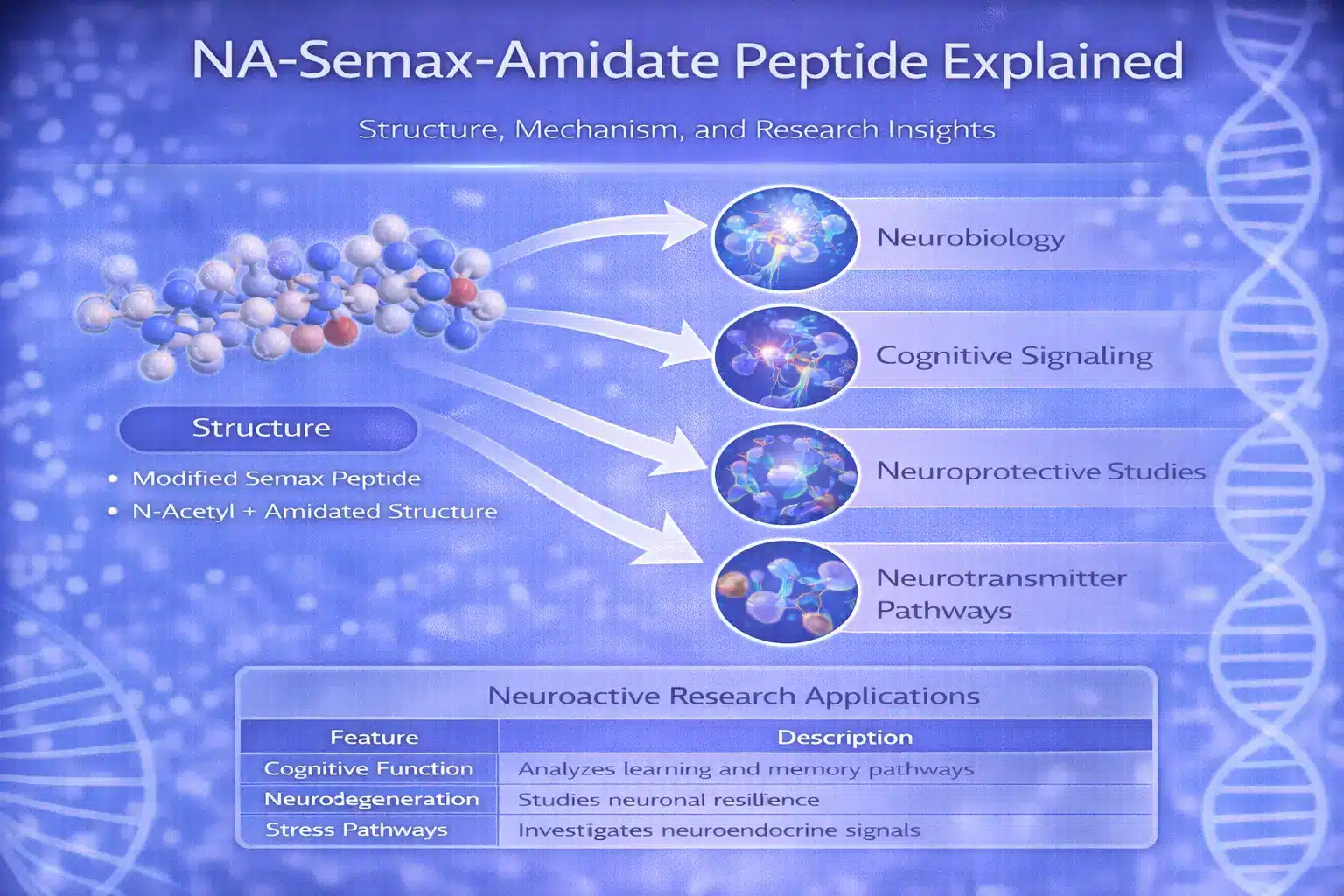
Researchers modified the Semax structure by adding N-acetylation and C-terminal amidation, which may increase stability and influence how the peptide interacts with neural receptors in experimental models.
These structural changes allow scientists to explore how peptide modifications can alter biological activity in neurological research.
Molecular Structure
NA-Semax-Amidate is a synthetic heptapeptide with structural modifications designed to enhance stability and bioactivity in research environments.
Key characteristics include:
- Derived from the ACTH (4-10) peptide fragment
- N-acetyl modification at the N-terminus
- Amidated C-terminus for improved molecular stability
These changes help researchers analyze the peptide’s potential interactions with neural signaling systems.
Mechanism of Action in Research Models
Laboratory studies suggest that NA-Semax-Amidate may interact with several biological pathways involved in brain signaling and neuroprotection.
1. Neurotrophic Factor Regulation
Some studies suggest the peptide may influence the expression of brain-derived neurotrophic factor (BDNF) and other molecules involved in neuronal survival and growth.
2. Neurotransmitter Modulation
Researchers have investigated whether NA-Semax-Amidate affects neurotransmitter systems such as:
- Dopamine
- Serotonin
- Acetylcholine
These systems play essential roles in cognitive signaling and neural communication.
3. Neuroprotective Pathways
Experimental models suggest that the peptide may influence pathways related to oxidative stress and neuronal protection, making it a compound of interest in neurobiology research.
Potential Research Applications
Because of its interaction with neurological pathways, NA-Semax-Amidate is studied in several areas of research.
Cognitive Function Research
Scientists examine how the peptide may affect pathways associated with learning, memory, and cognitive signaling.
Neurodegenerative Research
Some laboratory studies explore whether the peptide interacts with mechanisms related to neurodegeneration and neuronal resilience.
Stress and Neuroendocrine Research
Researchers also analyze how peptide signaling may influence stress-related neurochemical pathways.
Why Modified Peptides Are Important in Research
Peptide modification is a common strategy in molecular biology. By altering the structure of existing peptides, scientists can:
- Increase molecular stability
- Improve receptor interaction
- Study targeted biological pathways
NA-Semax-Amidate represents one example of how peptide engineering can expand the possibilities of neuroscience research.
Final Thoughts
NA-Semax-Amidate highlights the growing interest in synthetic neuroactive peptides and their potential role in studying complex neurological systems. Through structural modifications and targeted molecular design, researchers can explore how peptides interact with brain signaling pathways and influence neurobiological processes.
As peptide research continues to advance, compounds like NA-Semax-Amidate help scientists better understand the relationship between molecular structure and neurological function.
Disclaimer
All peptides discussed are intended for laboratory research purposes only and are not approved for human consumption, medical treatment, or therapeutic use.