Peptide science continues to evolve with compounds designed to explore highly specific cellular mechanisms. One peptide that has attracted interest in experimental oncology research is PNC-27. Scientists study this peptide for its potential interaction with specific membrane proteins and its role in targeted cellular signaling pathways.
This article explores PNC-27’s molecular structure, proposed mechanism of action, and areas where researchers are investigating its biological interactions.
Disclaimer: PNC-27 is intended strictly for laboratory research purposes. It is not approved for human or veterinary use.
What Is PNC-27?
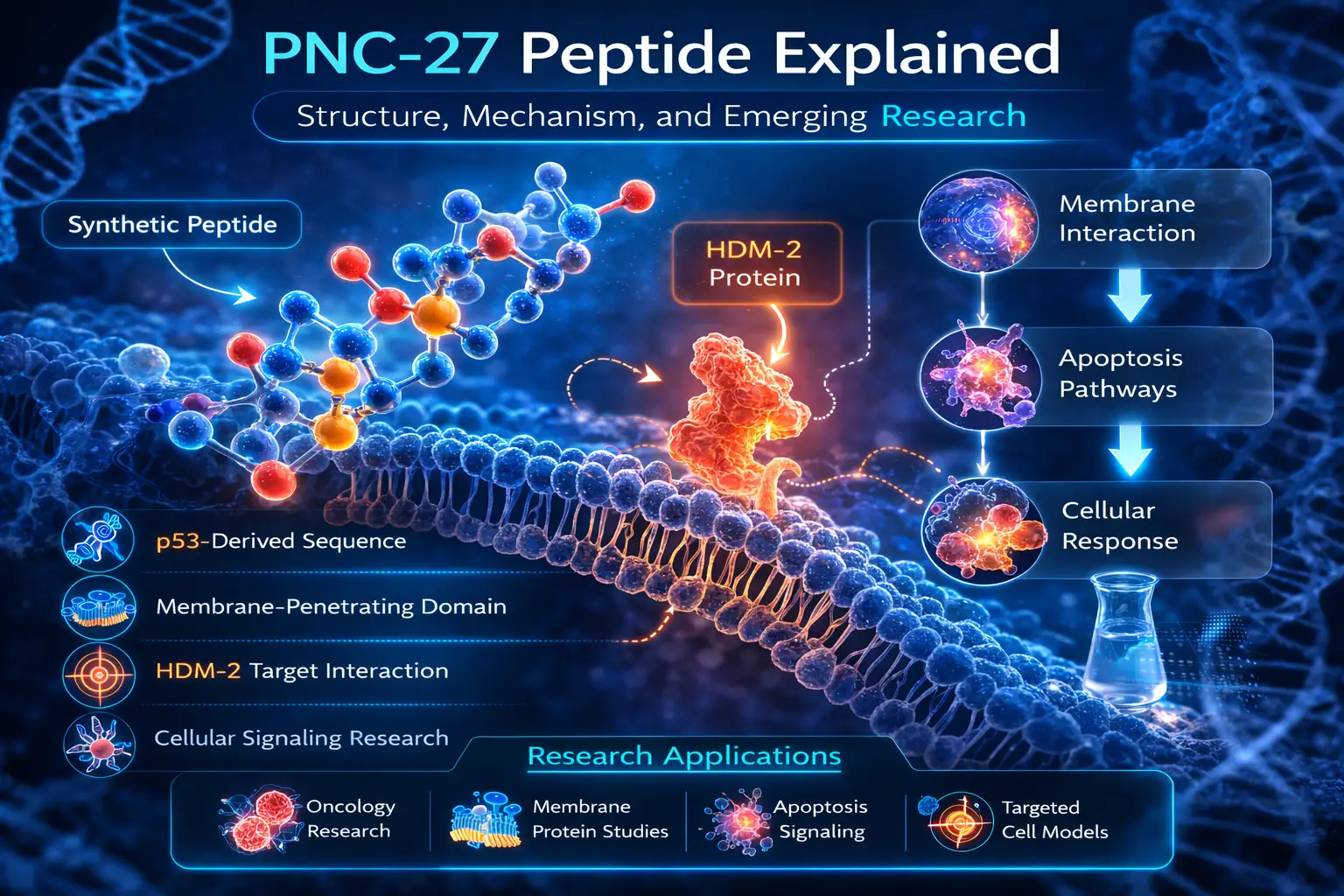
PNC-27 is a synthetic peptide engineered from a segment of the p53 tumor suppressor protein, combined with a membrane-penetrating peptide domain. Researchers developed this peptide to investigate how targeted peptide structures may interact with proteins expressed on certain cell membranes.
The peptide’s design allows scientists to explore mechanisms involving cellular membrane integrity, receptor interactions, and targeted signaling pathways.
Because of its hybrid structure, PNC-27 is commonly categorized as a membrane-targeting research peptide.
Structural Characteristics
PNC-27 consists of two main components:
- p53-Derived Sequence
The peptide contains a segment derived from the p53 protein, which is widely known in cellular biology for its role in regulating cell cycle progression and apoptosis signaling. - Membrane-Penetrating Domain
A secondary peptide sequence allows PNC-27 to penetrate cell membranes and interact with membrane-associated proteins.
These structural elements allow researchers to investigate how engineered peptides can selectively interact with cellular targets.
Proposed Mechanism of Action
In experimental models, PNC-27 is studied for its interaction with HDM-2 (Human Double Minute-2) proteins that may appear on the surface of certain cells.
1. HDM-2 Binding
Researchers propose that PNC-27 may bind to HDM-2 proteins expressed on cellular membranes. HDM-2 normally regulates p53 activity within cells.
2. Membrane Interaction
After binding to HDM-2, the peptide may interact with the lipid bilayer of the membrane, potentially affecting membrane stability in experimental models.
3. Cellular Response Signaling
Laboratory studies investigate how these interactions may influence cellular stress signaling, apoptosis pathways, or membrane integrity.
Areas of Active Research
Researchers have investigated PNC-27 in several experimental settings:
- Cellular oncology models
- Membrane protein interaction studies
- Apoptosis signaling pathways
- Targeted peptide delivery systems
- Experimental cancer biology models
- Protein-protein interaction research
Because of its unique structure, PNC-27 has become a useful tool in molecular oncology research.
PNC-27 vs. Other Research Peptides
| Feature | PNC-27 | BPC-157 | Epitalon |
| Research Category | Cellular signaling | Tissue repair research | Longevity research |
| Target Interaction | HDM-2 membrane proteins | Growth factor pathways | Telomerase pathways |
| Primary Focus | Oncology research | Cellular regeneration | Aging research |
| Structural Type | Hybrid peptide | 15-amino acid peptide | Tetrapeptide |
Unlike many peptides that interact with hormone receptors, PNC-27 focuses on direct protein interactions at the cellular membrane level.
Laboratory Handling Considerations
In controlled research environments, PNC-27 is typically handled under the following conditions:
- Stored in lyophilized form
- Maintained at low temperatures
- Reconstituted using sterile research solvents
- Protected from repeated freeze–thaw cycles
Proper handling ensures peptide stability and reproducibility in laboratory experiments.
Final Thoughts
PNC-27 represents a unique direction in peptide engineering, combining a tumor suppressor protein fragment with a membrane-penetrating sequence. This design allows researchers to explore how synthetic peptides can interact with specific membrane proteins and influence cellular signaling pathways.
As research in targeted peptides continues to grow, compounds like PNC-27 may help scientists better understand cellular regulation and protein interaction networks.