
Peptide research continues to explore compounds that interact with neurological and receptor-based signaling systems. One such compound that has gained attention in experimental studies is PT-141 (Bremelanotide), a synthetic peptide known for its interaction with melanocortin receptors.
Due to its unique mechanism of action and receptor specificity, PT-141 is widely studied in laboratory environments focused on neurochemical signaling and receptor-mediated pathways.
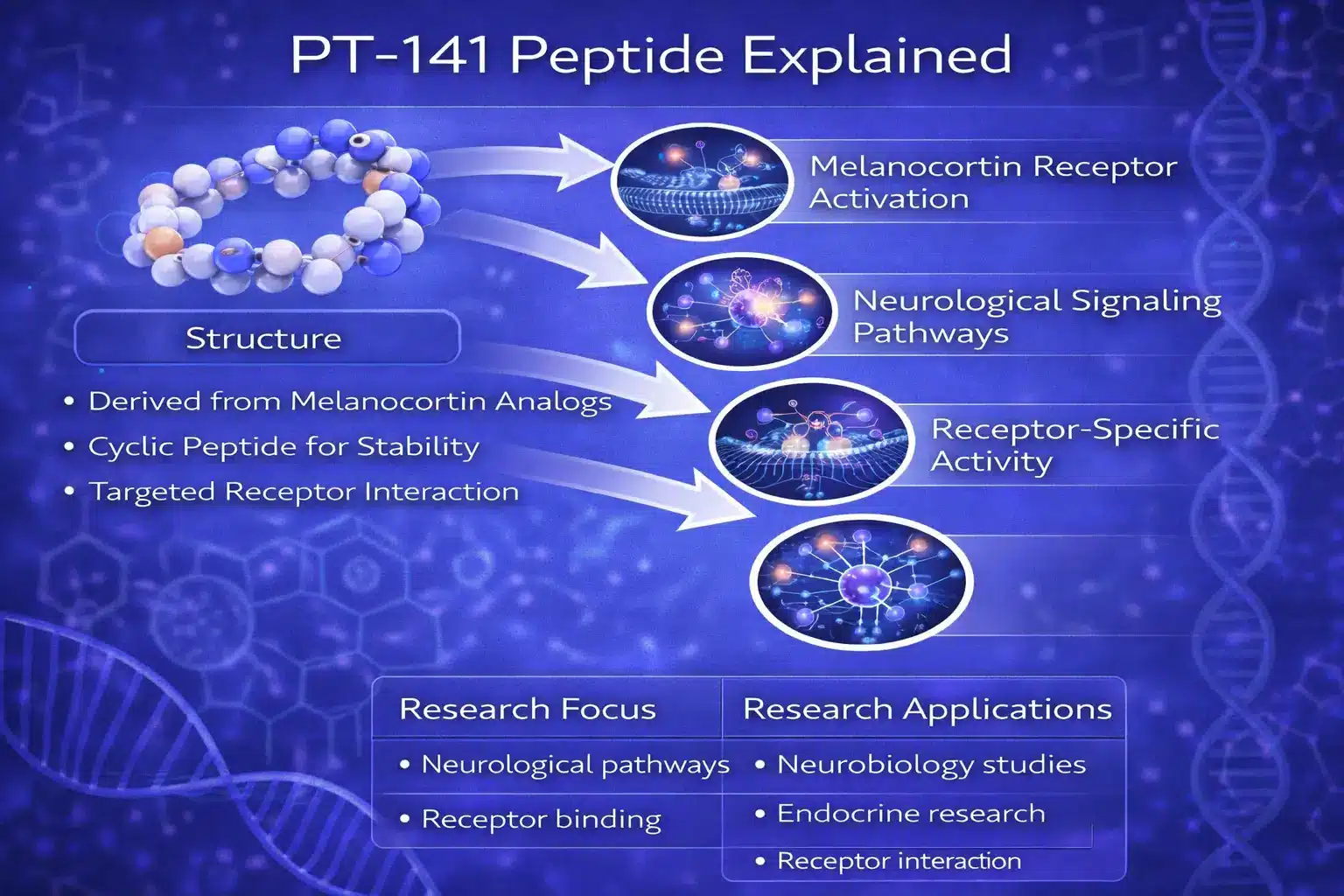
What is PT-141?
PT-141, also known as Bremelanotide, is a synthetic peptide derived from the melanocortin peptide family. It is structurally related to Melanotan II, but modified to target specific receptor pathways.
Researchers study PT-141 for its ability to interact with melanocortin receptors, which are involved in various physiological and neurological signaling processes.
Molecular Structure of PT-141
PT-141 is a cyclic peptide, meaning its structure forms a ring-like configuration that enhances stability and receptor binding.
Key structural features include:
- Derived from melanocortin peptide analogs
- Cyclic peptide structure for increased stability
- Designed for targeted receptor interaction
This structure allows researchers to study precise receptor-mediated signaling pathways.
Mechanism of Action in Research Models
Laboratory studies suggest that PT-141 interacts with specific receptors involved in neurological and endocrine signaling.
Melanocortin Receptor Activation
PT-141 is primarily studied for its interaction with melanocortin receptors (MC receptors), particularly those expressed in the central nervous system.
Neurological Signaling Pathways
Researchers investigate how activation of these receptors may influence neurotransmitter signaling and brain activity in experimental models.
Receptor-Specific Activity
Unlike some peptides that act systemically, PT-141 is studied for its targeted receptor activity, allowing scientists to isolate specific signaling effects.
Research Applications
Due to its receptor specificity, PT-141 is studied across multiple scientific fields.
Neurobiology Research
Scientists explore how PT-141 interacts with brain signaling pathways and receptor systems.
Endocrine Studies
Research models examine how the peptide may influence hormonal signaling pathways.
Receptor Binding Studies
PT-141 is widely used in laboratory settings to analyze receptor-ligand interactions and signaling mechanisms.
Importance of Melanocortin Peptides
Melanocortin peptides are important in research because they regulate a variety of biological processes through receptor-mediated signaling. By studying peptides like PT-141, researchers can better understand how these receptors function and how signaling pathways are controlled at the molecular level.
Final Thoughts
PT-141 represents an important advancement in peptide research due to its targeted receptor interaction and unique cyclic structure. Its ability to influence melanocortin receptor pathways makes it a valuable compound for studying neurological and endocrine signaling.
As peptide science continues to grow, PT-141 provides researchers with deeper insight into receptor-specific mechanisms and molecular communication systems.
Disclaimer
All peptides mentioned are intended strictly for laboratory research purposes only. They are not approved for human consumption, medical use, or therapeutic applications.