Peptide-based research continues to explore compounds involved in cellular communication, structural protein interactions, and tissue-related signaling pathways. One peptide that has attracted attention in laboratory investigations is TB-500, a synthetic version of a naturally occurring peptide fragment associated with cellular structural dynamics. This article examines TB-500’s structure, mechanism, and areas of ongoing research interest.
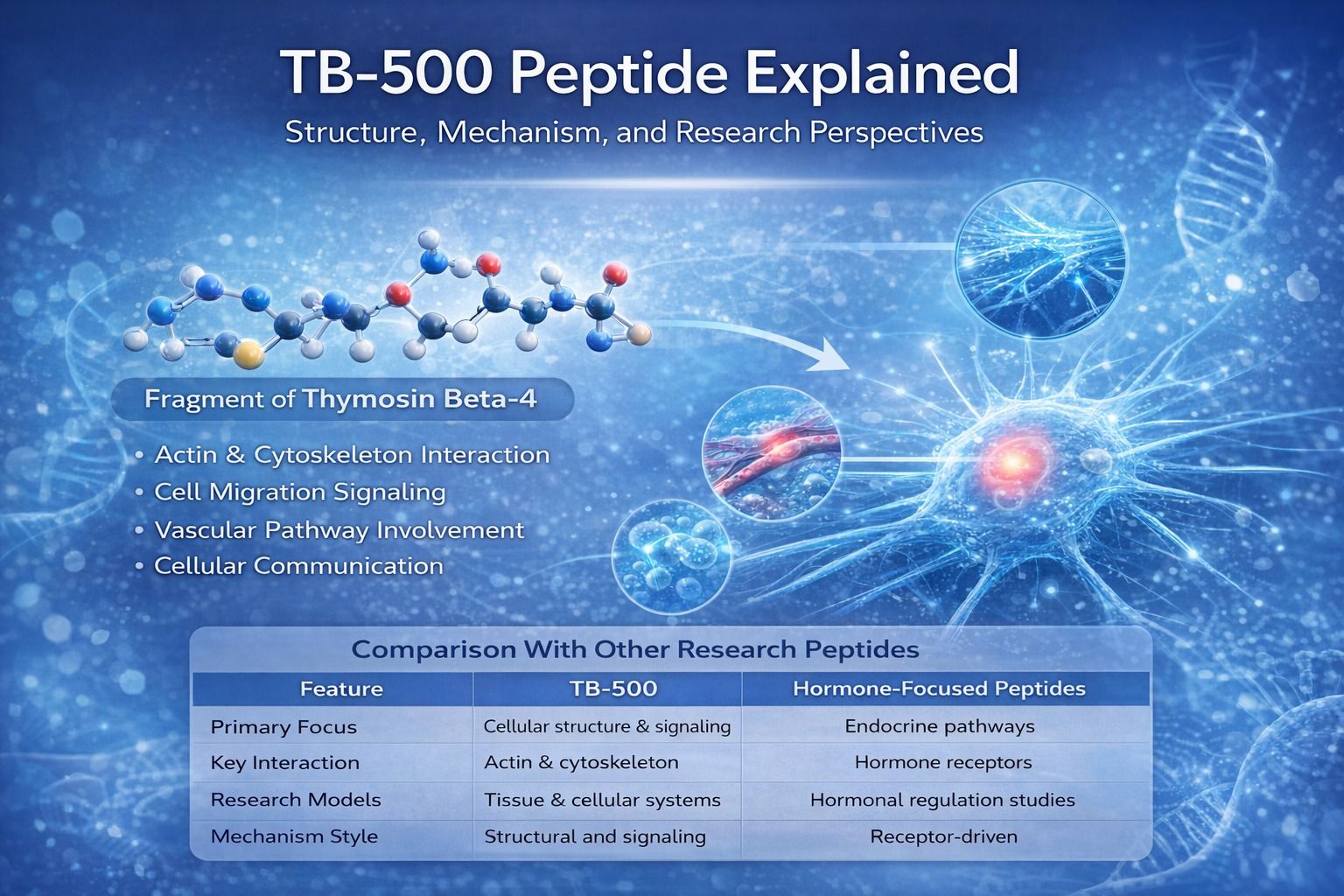
What Is TB-500?
TB-500 is a synthetic peptide derived from a fragment of Thymosin Beta-4 (Tβ4), a naturally occurring peptide found in many cell types. In research environments, TB-500 is studied for its involvement in cell migration, cytoskeletal organization, and intracellular signaling.
Chemical Type: Synthetic peptide fragment
Parent Molecule: Thymosin Beta-4
Primary Research Focus: Cellular structure, signaling pathways, and tissue models
Molecular Structure of TB-500
TB-500 represents an active region of Thymosin Beta-4 that is linked in research to cellular structural regulation. Its structure contributes to:
- Interaction with actin, a key component of the cytoskeleton
- Support of cellular movement in experimental models
- Stability suitable for laboratory investigation
Because the cytoskeleton plays a central role in cell shape and transport processes, peptides like TB-500 are important in studies of cellular architecture.
Mechanism of Action (Research Context)
TB-500 is studied primarily for its influence on actin dynamics and cellular communication pathways.
Research-Observed Mechanisms
- Actin Binding – TB-500 is associated with regulation of actin polymerization, a critical process in cell structure.
- Cell Migration Signaling – Research models investigate its role in cellular movement and organization.
- Angiogenic Pathway Involvement – Studies explore its relationship with vascular-related signaling pathways.
- Cellular Communication – It is examined for its contribution to intracellular and intercellular signaling processes.
Through these mechanisms, TB-500 is considered a peptide of interest in structural and signaling research.
Research Areas Involving TB-500
TB-500 is not approved for medical use but is widely examined in controlled laboratory settings.
1. Cellular Structure Research
Investigations focus on how peptides influence cytoskeletal organization and structural protein interactions.
2. Tissue Model Studies
Researchers study peptides associated with cellular migration and organization in tissue-based experimental systems.
3. Vascular and Endothelial Research
TB-500 is included in studies exploring signaling pathways related to vascular cell behavior.
4. Molecular Signaling Pathways
Its relationship with intracellular signaling networks makes it relevant in broader molecular research.
Comparison With Other Research Peptides
Feature | TB-500 | Hormone-Focused Peptides |
Primary Focus | Cellular structure & signaling | Endocrine pathways |
Key Interaction | Actin & cytoskeleton | Hormone receptors |
Research Models | Tissue & cellular systems | Hormonal regulation studies |
Mechanism Style | Structural and signaling | Receptor-driven |
This distinction highlights TB-500’s relevance in cellular architecture research rather than endocrine-focused studies.
Stability and Laboratory Handling
As with most research peptides:
- Store at low temperatures
- Avoid repeated freeze–thaw cycles
- Use sterile laboratory solvents for reconstitution
Following standard laboratory handling protocols helps maintain structural integrity.
Current Research Status
TB-500 remains a research-use-only peptide. Ongoing studies aim to further understand:
- Cytoskeletal signaling interactions
- Cell migration pathways
- Vascular signaling relationships
- Comparative analysis with Thymosin Beta-4
Its association with structural proteins keeps it a subject of interest in cell biology research.
Final Thoughts
TB-500 represents a significant compound in peptide research focused on cellular structure, actin dynamics, and signaling networks. Rather than targeting endocrine pathways, it is studied for its role in fundamental cellular processes. As research progresses, TB-500 continues to contribute to the understanding of how peptide fragments influence complex biological systems at the cellular level.
Disclaimer:
This compound is intended strictly for laboratory research purposes. It is not approved for human or veterinary use and is not intended to diagnose, treat, cure, or prevent any disease.