Peptide research continues to advance our understanding of immune signaling, cellular communication, and biological regulation. Among the peptides frequently explored in immunological research is Thymosin Alpha-1 (Tα1), a naturally occurring peptide known for its role in immune system modulation. Researchers have studied this compound extensively to better understand how peptide signaling influences immune responses and cellular function.
What Is Thymosin Alpha-1?
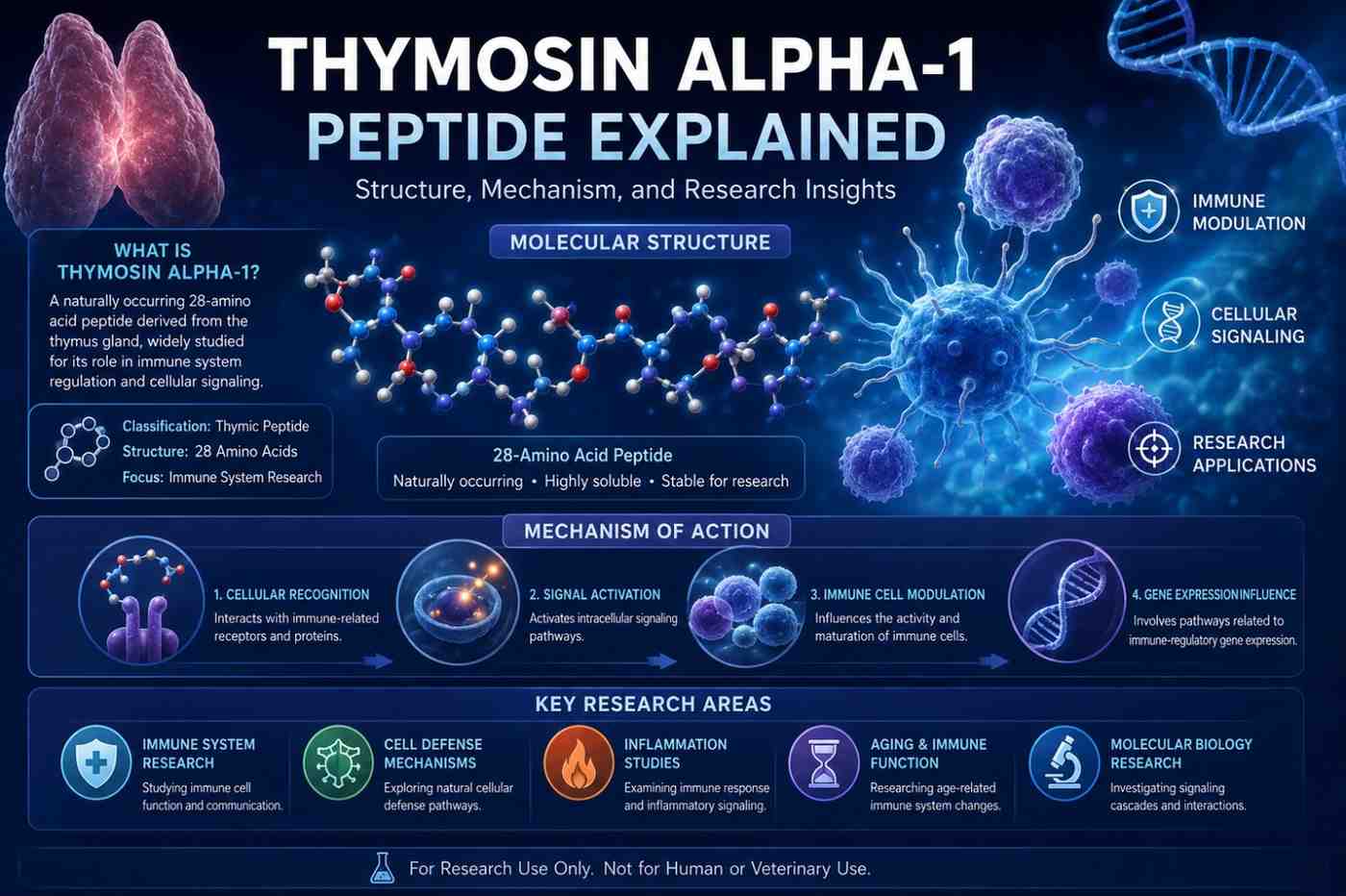
Thymosin Alpha-1 is a naturally occurring peptide originally isolated from the thymus gland. It consists of 28 amino acids and plays an important role in immune-related cellular processes. Due to its involvement in immune signaling pathways, it has become a valuable subject in laboratory and biological research.
Chemical Classification: Thymic Peptide
Structure Type: 28-Amino Acid Peptide
Primary Research Focus: Immune system regulation and cellular signaling
Molecular Structure of Thymosin Alpha-1
Thymosin Alpha-1 is a short-chain peptide composed of a specific amino acid sequence that contributes to its biological activity.
Key structural characteristics include:
- Naturally occurring peptide sequence
- High solubility in aqueous environments
- Stability suitable for laboratory studies
- Interaction with multiple immune-related signaling pathways
Its structure allows researchers to investigate how peptides influence communication between immune cells and regulatory proteins.
Mechanism of Action
Thymosin Alpha-1 is primarily studied for its interaction with immune signaling networks.
Step-by-Step Mechanism
1. Cellular Recognition
The peptide interacts with immune-related receptors and signaling molecules.
2. Signal Activation
Intracellular pathways become activated, influencing cellular communication.
3. Immune Cell Modulation
Research suggests effects on the activity and maturation of specific immune cell populations.
4. Gene Expression Influence
Certain studies indicate involvement in pathways related to immune-regulatory gene expression.
These mechanisms make Thymosin Alpha-1 an important tool for understanding immune system regulation.
Research Areas Involving Thymosin Alpha-1
1. Immune System Research
Scientists investigate how peptide-mediated signaling influences immune cell behavior and communication.
2. Cellular Defense Mechanisms
Research models often explore the relationship between Thymosin Alpha-1 and natural cellular defense pathways.
3. Inflammation Signaling Studies
The peptide is frequently examined in studies evaluating immune response regulation and inflammatory signaling networks.
4. Aging and Immune Function Research
Researchers continue studying age-related changes in immune activity and how peptide signaling may influence these processes.
5. Molecular Biology Research
Thymosin Alpha-1 is used to investigate receptor interactions, protein signaling cascades, and cellular communication mechanisms.
Comparison With Other Immune-Related Peptides
Feature | Typical Regulatory Peptides | |
Primary Focus | Immune signaling | Varies by peptide |
Origin | Naturally occurring | Natural or synthetic |
Research Applications | Immunology studies | Diverse biological models |
Mechanism | Multi-pathway signaling | Often receptor-specific |
Cellular Targets | Immune-related cells | Various cell types |
Its broad involvement in immune-related pathways distinguishes it from many other research peptides.
Stability and Laboratory Handling
To maintain peptide integrity during research, laboratories typically follow established handling procedures:
- Store according to recommended temperature guidelines
- Use sterile laboratory-grade solvents for reconstitution
- Minimize repeated freeze-thaw cycles
- Protect samples from contamination and degradation
These practices help preserve peptide quality throughout experimental procedures.
Current Research Status
Thymosin Alpha-1 remains an active area of scientific investigation.
Current research topics include:
- Immune signaling pathways
- Cellular communication networks
- Inflammatory response mechanisms
- Molecular regulation studies
- Age-related immune function research
As immunology research evolves, interest in thymic peptides continues to expand.
Final Thoughts
Thymosin Alpha-1 represents an important peptide in immunological and cellular signaling research. Its naturally occurring structure and involvement in multiple immune-related pathways make it a valuable compound for studying how biological systems coordinate complex cellular responses.
As peptide science advances, Thymosin Alpha-1 continues to provide researchers with insights into immune regulation, molecular communication, and cellular biology.
Disclaimer
This compound is intended strictly for laboratory research purposes. It is not approved for human or veterinary use and is not intended to diagnose, treat, cure, or prevent any disease.