Peptide research continues to reveal important insights into immune signaling, cellular communication, and regulatory pathways. Among the peptides studied in laboratory environments, Thymosin Alpha-1 (Tα1) has attracted significant scientific interest due to its involvement in immune system modulation in experimental models.
This article explores the structure of Thymosin Alpha-1, its proposed mechanism of action, and areas of ongoing research.
What Is Thymosin Alpha-1?
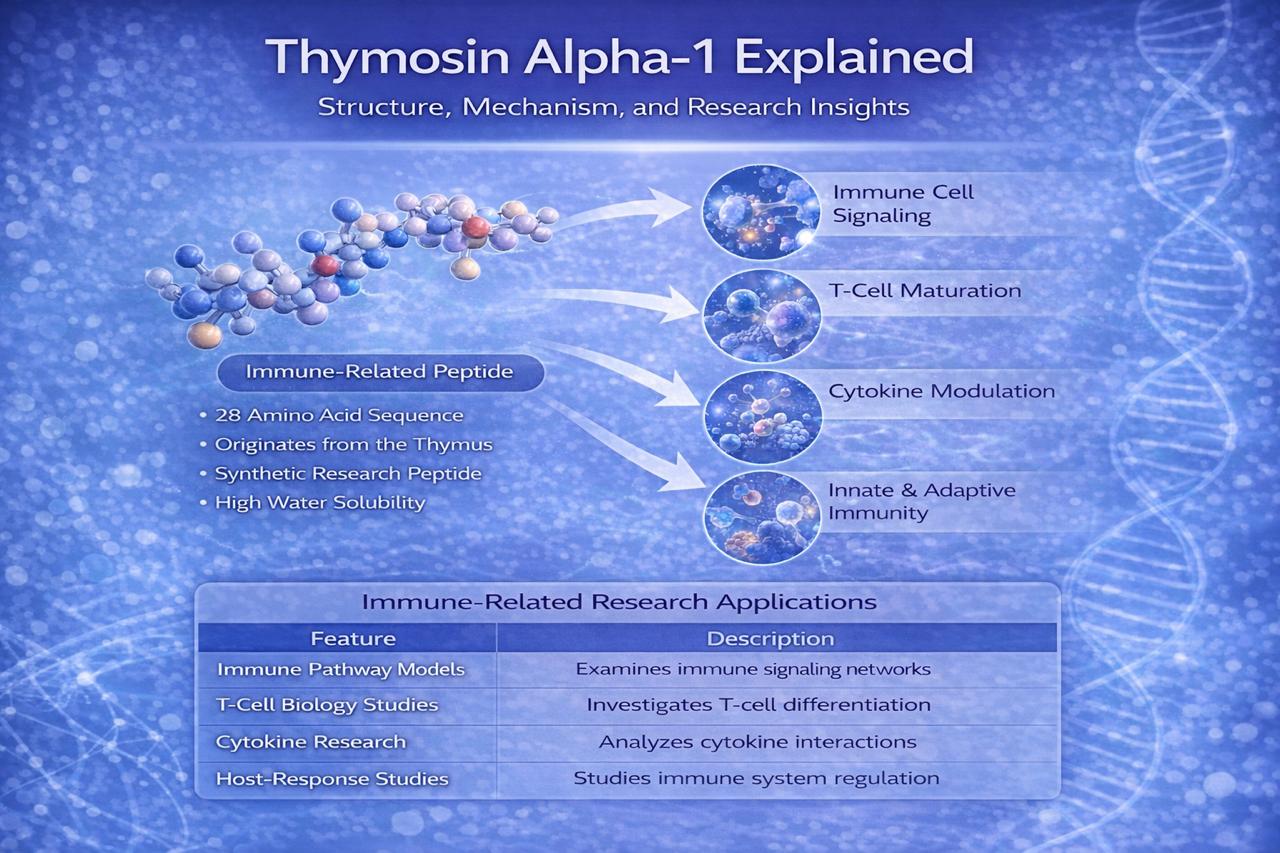
Thymosin Alpha-1 is a synthetic version of a naturally occurring peptide originally isolated from the thymus gland. It consists of 28 amino acids and is classified as an immune-related regulatory peptide in research literature.
Because of its role in thymic signaling pathways, Thymosin Alpha-1 is widely examined in laboratory studies focused on immune cell communication and regulatory biology.
Structural Characteristics
Thymosin Alpha-1 is a linear peptide with a relatively small molecular size, which allows researchers to study its receptor interactions and signaling behavior in controlled environments.
Key structural features include:
- 28-amino-acid sequence
- High water solubility
- Stability in lyophilized form
- Compatibility with standard peptide research protocols
These properties make it suitable for a wide range of laboratory investigations.
Mechanism of Action
In experimental models, Thymosin Alpha-1 is studied for its interaction with immune signaling pathways.
Proposed Mechanistic Pathways
- Immune Cell Signaling Support
Research suggests Thymosin Alpha-1 may influence communication between immune cell populations in vitro. - T-Cell Maturation Pathways
Because of its thymic origin, the peptide is frequently examined in studies involving T-cell differentiation and activation models. - Cytokine Modulation Research
Laboratory investigations indicate potential involvement in cytokine signaling networks. - Innate and Adaptive Immunity Models
Thymosin Alpha-1 is often used in research exploring the interface between innate and adaptive immune responses.
Areas of Research Interest
In peptide and immunological research, Thymosin Alpha-1 is commonly investigated in:
- Immune signaling pathway studies
- T-cell biology research
- Cytokine network analysis
- Cellular communication models
- Host-response laboratory investigations
Its immune-related profile makes it a valuable compound in modern peptide research.
Stability and Handling in Research
Thymosin Alpha-1 is typically supplied in lyophilized powder form to preserve peptide stability. Standard laboratory practices include:
- Storage at low recommended temperatures
- Reconstitution with sterile research solvents
- Protection from light exposure
- Avoidance of repeated freeze-thaw cycles
Proper handling ensures consistent experimental performance.
Why Researchers Study Thymosin Alpha-1
Scientific interest in Thymosin Alpha-1 continues to grow due to its:
- Defined thymic origin
- Small, well-characterized structure
- Role in immune signaling research
- Compatibility with in-vitro experimental systems
These characteristics support its ongoing use in immunology-focused peptide research.
Final Thoughts
Thymosin Alpha-1 remains an important peptide in the field of immune system research. Its involvement in cellular signaling and immune pathway studies makes it a valuable tool for laboratory investigations exploring complex biological communication networks.
As peptide science advances, Thymosin Alpha-1 continues to provide meaningful insights into immune regulatory mechanisms.
Disclaimer:
For laboratory research use only. Not for human consumption. This product is not intended to diagnose, treat, cure, or prevent any disease.