Peptide science continues to offer researchers valuable tools for understanding cellular processes, structural protein dynamics, and biochemical signaling. One such peptide gaining attention in laboratory research is Tripeptide-29, a small collagen-related peptide that plays an important role in collagen structure and potential tissue signaling pathways. In this article, we dive into Tripeptide-29’s structure, mechanism of action, and current research context.
What Is Tripeptide-29?
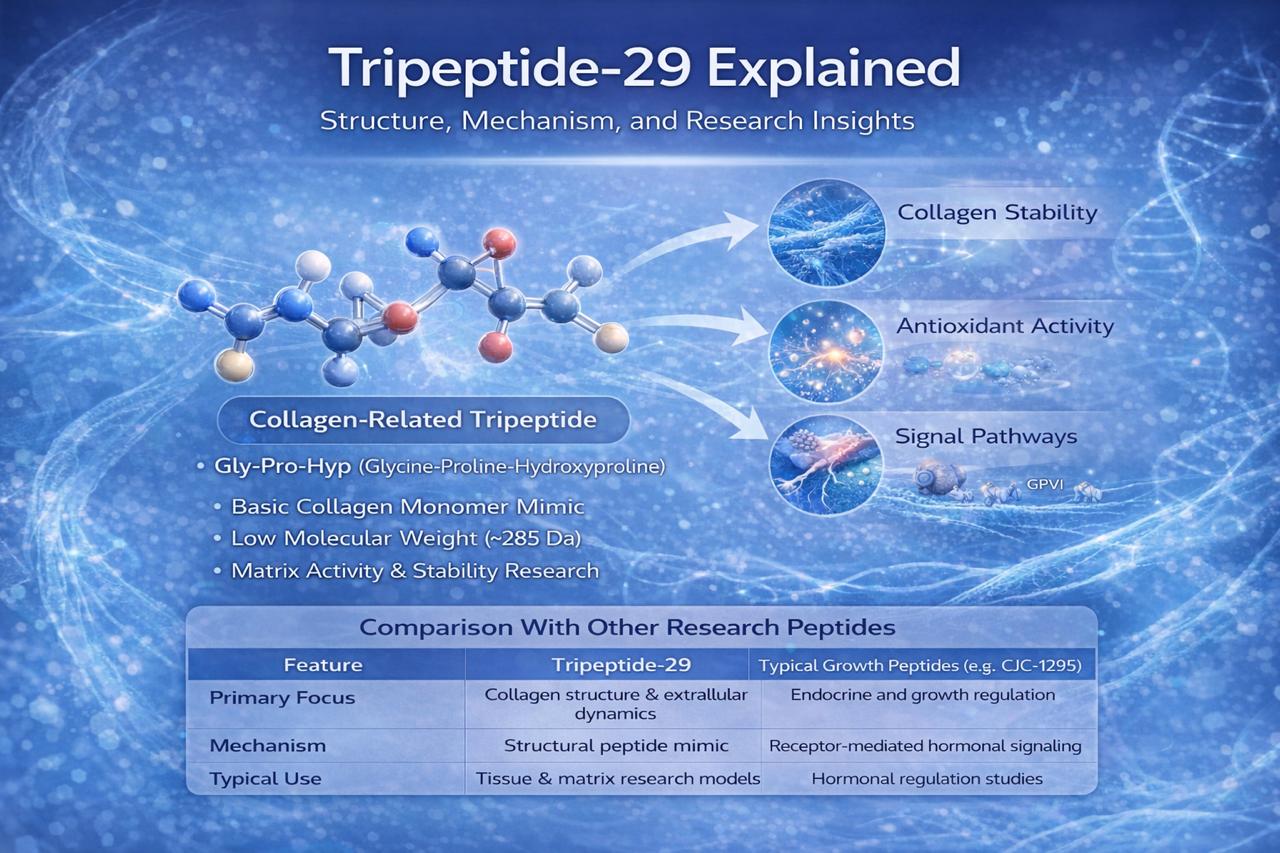
Tripeptide-29 is a synthetic peptide comprised of three amino acids — glycine, proline, and hydroxyproline — which closely resemble the basic monomer units found in collagen, one of the most abundant structural proteins in biological tissues. This peptide is sold by research suppliers such as Biotech Peptides for laboratory and analytical purposes only, and is intended to support controlled scientific studies rather than therapeutic use.
Peptide Type: Collagen-related tripeptide
Molecular Formula: C₁₂H₁₉N₃O₅
Sequence: Gly-Pro-Hyp (Glycine-Proline-Hydroxyproline)
Molecular Structure and Key Features
Tripeptide-29 represents one of the fundamental building blocks that form larger collagen structures. Its small size and unique amino acid sequence contribute to several properties of interest in research:
- Basic collagen monomer mimicry, reflecting the repeating Gly-Pro-Hyp motif found in collagen fibers.
- Low molecular weight (≈285 Da), which theoretically supports dermal penetration and interaction in model systems.
- Potential association with structural stability and peptide-mediated signaling in experimental models focused on extracellular matrix dynamics.
Because Tripeptide-29 mimics collagen fragments, researchers explore its effects on collagen integrity, fibroblast activity, and structural protein behaviors in laboratory settings.
Research Mechanism: How It’s Studied
While Tripeptide-29 does not act as a hormone or growth factor, it participates in biological pathways related to collagen structure and cellular signaling in research models.
Observed Mechanisms in Research
- Collagen Stability and Structure
Short collagen-derived peptides like Tripeptide-29 help scientists understand how small monomers influence overall collagen superstructure and stability, which relates to mechanical tissue properties and resistance to breakdown in vitro. - Antioxidant and Cellular Protection Pathways
Preliminary research suggests that Tripeptide-29 may display antioxidant activity, helping reduce oxidative stress and the formation of advanced glycation end products (AGEs), factors linked to cellular aging and tissue integrity. - Platelet and Signal Pathways
In certain collagen-related models, Tripeptide-29 may interact with the GPVI collagen receptor on platelets, contributing to signals associated with clotting models and vascular tissue research.
Applications in Experimental Research
Tripeptide-29 is currently used in controlled laboratory environments for:
1. Collagen and Extracellular Matrix Studies
Researchers use Tripeptide-29 to explore structure–function relationships within collagen fibers, including how these small monomers influence mechanical properties and signaling behavior.
2. Antioxidant and Aging Investigations
Studies evaluating oxidative stress pathways and cellular aging processes may incorporate this peptide as a model for collagen-derived antioxidant activity.
3. Tissue Integrity and Fibrosis Models
Tripeptide-29’s potential influence on extracellular matrix dynamics makes it a compound of interest in studies of tissue fibrosis and structural regulation.
Comparison With Other Research Peptides
Feature | Tripeptide-29 | Typical Growth Peptides (e.g., CJC-1295) |
Primary Focus | Collagen structure & extracellular dynamics | Endocrine and growth regulation |
Mechanism | Structural peptide mimic | Receptor-mediated hormonal signaling |
Typical Use | Tissue & matrix research models | Hormonal regulation studies |
Tripeptide-29’s role lies in exploring tissue and matrix structure, contrasting with peptides primarily studied for endocrine signaling or metabolic modulation.
Procurement and Research Handling
Products like Tripeptide-29 from Biotech Peptides are:
- Synthesized and lyophilized to high purity for laboratory use.
- Sold exclusively for research, analysis, or laboratory investigation and clearly not intended for human or animal consumption.
Researchers handling this peptide in experimental contexts should follow established laboratory protocols for storage, reconstitution, and experimental application.
Final Thoughts
Tripeptide-29 represents an important collagen-related peptide in extracellular matrix research and structural peptide studies. Its simple, three-amino-acid sequence offers a valuable model for understanding how collagen monomers contribute to structural integrity, signaling pathways, and oxidative stability in controlled scientific environments. As peptide research evolves, compounds like Tripeptide-29 continue to support deeper insights into tissue biology and protein network behavior.
Disclaimer:
All products mentioned are intended strictly for laboratory research and analysis. They are not approved for human or animal use and are not intended to diagnose, treat, cure, or prevent any disease.